Tag: The New York Times

Reading of the Week: Cannabinoids for Therapeutic Use – the New JAMA Paper; Also, ECT and Szalavitz on Her Recovery & Substance Use

From the Editor

Cannabis for chronic pain? What about insomnia or seizures? Patients often ask about the therapeutic use of cannabis. And your patients aren’t the only ones thinking about it; more than one in four Americans have used cannabis for medicinal purposes. But what does the literature actually say?

In an impressive, new review paper just published in JAMA, Dr. Michael Hsu (of the University of California, Los Angeles) and his co-authors seek to answer that question. With 124 citations, they are thorough and thoughtful, drawing on studies, clinical guidelines, and more. They are also clear in their conclusion. “Despite the accumulation of new studies, evidence is insufficient for the use of cannabis or cannabinoids for most medical conditions.” We consider the paper and its implications.

In the second selection from The Lancet Psychiatry, Dr. Richard Braithwaite (of the Sussex Partnership NHS Foundation Trust) and his co-authors comment on ketamine for depression. Though some new studies have reported solid results comparable to ECT, they remain skeptical. “The claim that ketamine is equivalent to ECT is not supported by credible evidence. It is a narrative constructed on a foundation of a small number of inadequately designed trials and flawed meta-analyses.”

Is sobriety required for recovery from substance misuse? In a personal essay for The New York Times, writer Maia Szalavitz argues that it isn’t. She notes her own journey which has spanned 40 years. “In reality, most people who resolve addictions – including me – do not reject all substance use forever.”

DG

Continue reading

Reading of the Week: Brief CBT for Suicidal Vets – the JAMA Psych Study; Also, Docs & Generative AI, and Lamas on Organ Transplants & Mental Illness

From the Editor

As psychotherapies have become increasingly more practical and relevant in recent years, we may ask: could a focused therapy help individuals who are suicidal?

In a new JAMA Psychiatry paper, Craig J. Bryan (of the Ohio State University) and his co-authors attempt to answer that question, reporting on a randomized clinical trial involving military personnel and veterans. 108 participants were offered brief cognitive therapy (BCBT) or another psychotherapy, present-centred psychotherapy (PCT), building on past work that has shown the potential of BCBT for those who are suicidal. “This randomized clinical trial found that BCBT reduced suicide attempts among US military personnel and veterans reporting recent suicidal ideation and/or suicidal behaviors compared with an active comparator.” We consider the paper and its implications.

In the second selection, from JAMA Internal Medicine, Dr. Daniel J. Morgan (of the University of Maryland) and his co-authors, ask what physicians can do to prepare for generative AI. They offer several useful suggestions. “All physicians will need to understand the basics of GenAI to practice medicine in the next decade. Those without this understanding may find themselves burdened by archaic workflows or responsible for errors that GenAI could have prevented.”

And in the third selection, Dr. Daniela J. Lamas (of Harvard University), an intensivist, looks at transplantation and those who have mental disorders. In a New York Times essay, she notes an historic bias against such individuals. Still, she wonders about the difficulties of the area. Transplant is one of the most fraught decisions in medicine…”

DG

Continue reading

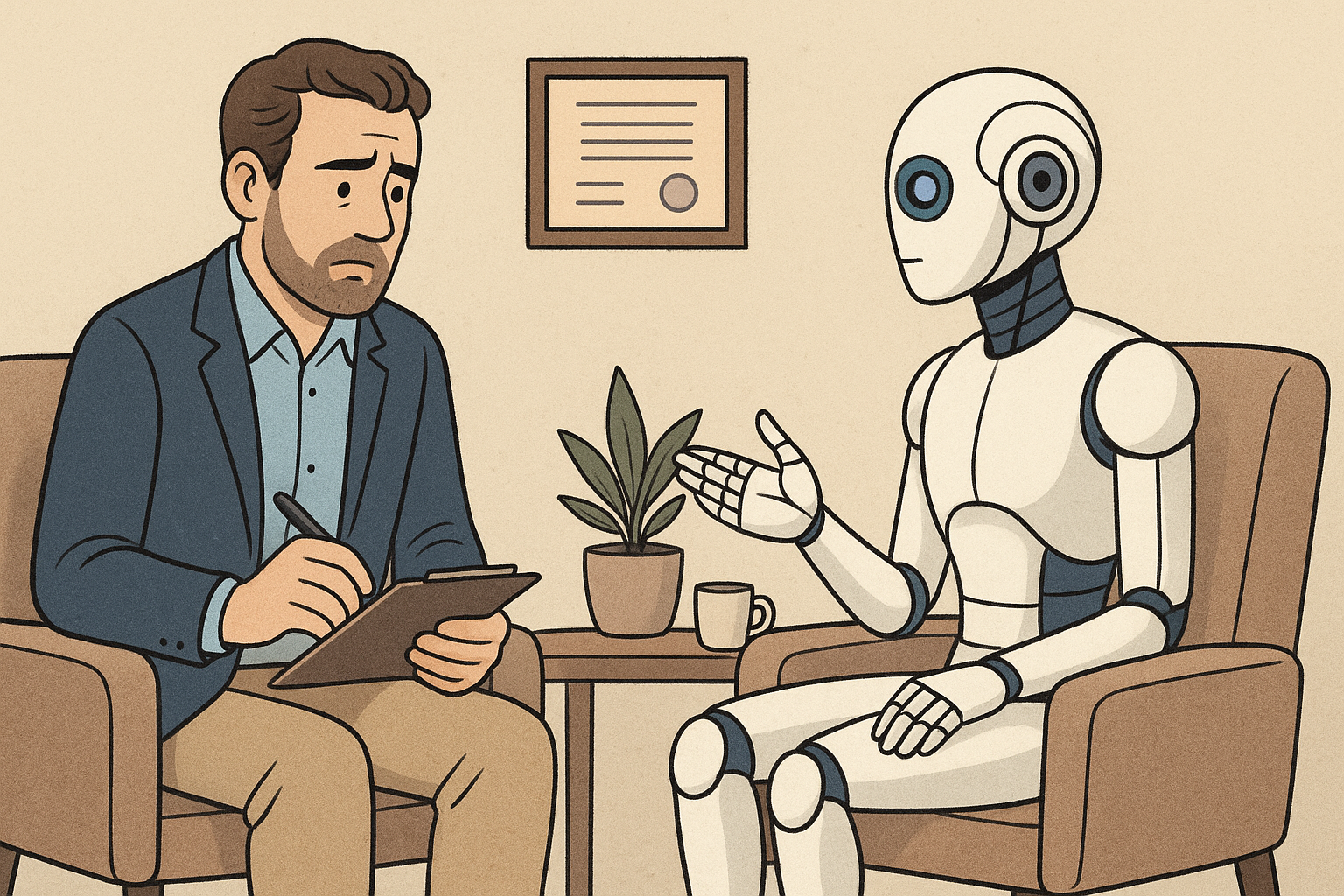
Reading of the Week: AI & Therapy

From the Editor

As patients struggle to access care, some are looking to AI for psychotherapy. Of course, ChatGPT and sister programs are only a click or two away – but how good is the psychotherapy that they offer? 

In a new American Journal of Psychotherapy paper, Dr. Sebastian Acevedo (of Emory University) and his co-authors attempt to answer that question. Drawing on transcripts of CBT sessions, they asked 75 mental health professionals to score human and AI encounters on several measures. So how did ChatGPT fare? “The findings suggest that although ChatGPT-3.5 may complement human-based therapy, this specific implementation of AI lacked the depth required for stand-alone use.” We consider the paper and its implications.

In the second selection, from JMIR Mental Health, Dr. Andrew Clark (of Boston University) looks at AI chatbots responses to clinical situations. Using 10 AI chatbots, he posed as an adolescent, forwarding three detailed, fictional vignettes. The results are surprising. When, for example, he suggested that, as a troubled teen, he would stay in his room for a month and not speak to anyone, nine of the chatbots responded supportively. “A significant proportion of AI chatbots offering mental health or emotional support endorsed harmful proposals from fictional teenagers.”

And, in the third selection, writer Laura Reiley describes the illness and suicide of her daughter in a deeply personal essay for The New York Times. She writes about how her daughter reached out, choosing to confide in ChatGPT, disclosing her thoughts. “ChatGPT helped her build a black box that made it harder for those around her to appreciate the severity of her distress.”

DG

Continue reading

Reading of the Week: How Many Steps A Day to Avoid Depression? The New Lancet Study; Also, TikTok & Med Records and Lieberman on ChatGPT Therapy

From the Editor

How much exercise is enough to prevent illness?

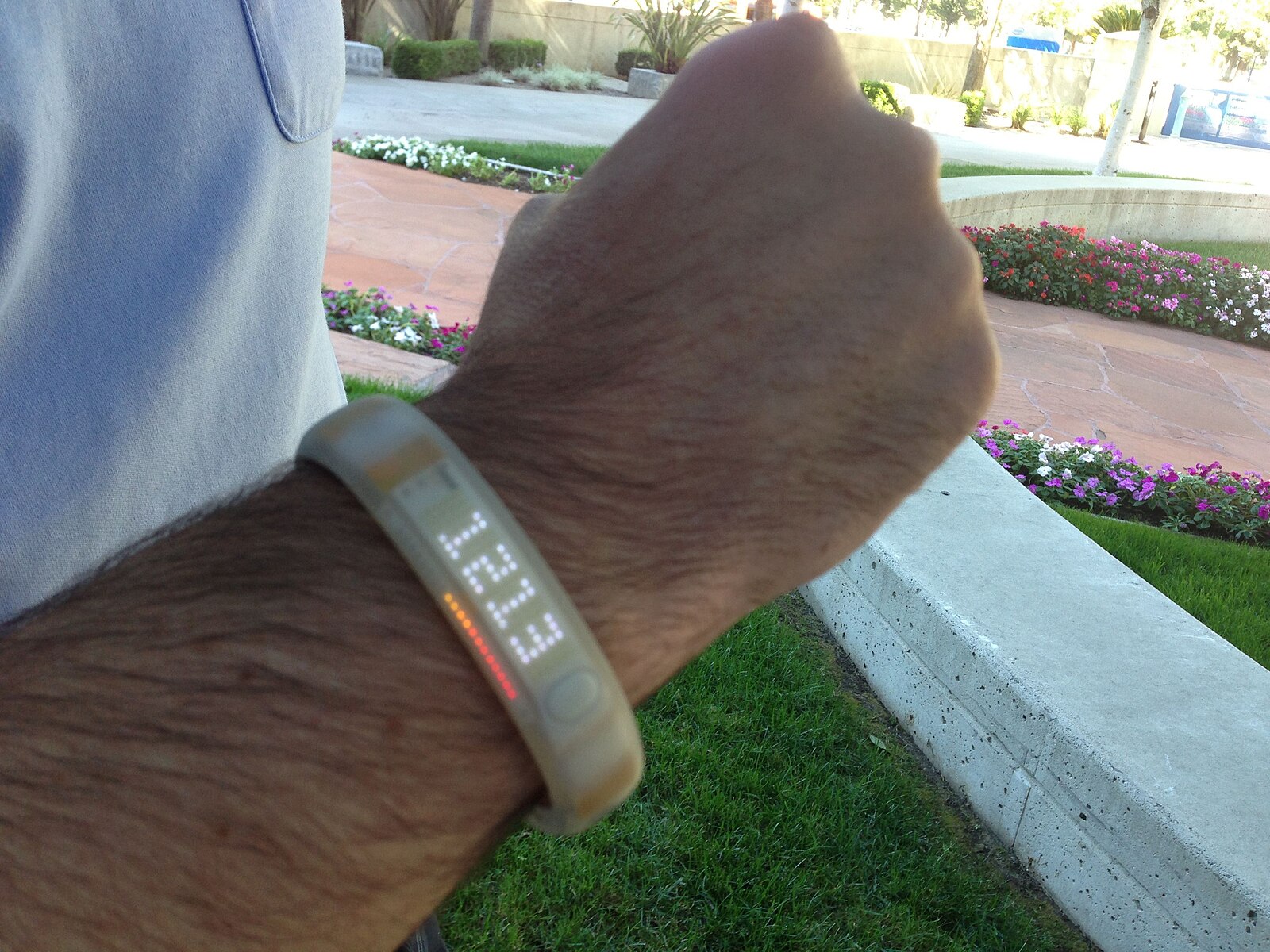
In the first selection, Ding Ding (of The University of Sydney) and her co-authors attempt to answer that question in a new, clever study for The Lancet Public Health. They did a systematic review and meta-analysis involving 57 studies that looked at daily step count and health outcomes, including depression. “Although 10 000 steps per day can still be a viable target for those who are more active, 7 000 steps per day is associated with clinically meaningful improvements in health outcomes and might be a more realistic and achievable target for some.” We consider the paper and its implications.

5 787 more steps needed?

In the second selection, Isabelle Toler and Lindsey Grubbs (both of Case Western Reserve University) look at medical records and language in a paper for The New England Journal of Medicine. In a unique approach, they observe themes in the TikTok videos of patients who are frustrated by what their physicians have written about them. “In the context of a system of medical documentation in which patients have little power to shape their own narratives, clinicians should respect the channels they have chosen to use to share their stories and listen to the messages they convey.”

And in the third selection, psychologist Harvey Lieberman reflects on therapy and ChatGPT in an essay for The New York Times. As a therapist and an octogenarian, he is skeptical of the therapeutic aspects of ChatGPT – but, with use, he partly changes his mind. “I concluded that ChatGPT wasn’t a therapist, although it sometimes was therapeutic. But it wasn’t just a reflection, either.”

Note: there will be no Reading next week.

DG

Continue reading

Reading of the Week: Antidepressant Discontinuation – the New JAMA Psych Study; Also, Obesity Meds and Nazaryan on His Father’s Depression

From the Editor

“New Research Questions Severity of Withdrawal From Antidepressants”

– The New York Times

“Antidepressant Pullback Symptoms Fewer Than Thought, Study Shows”

–  Bloomberg

Millions of North Americans take antidepressants – about one in seven Canadians – yet these medications remain controversial. A 2019 Lancet Psychiatry study, which drew heavily from online surveys, found that roughly half of patients who quit these meds experienced severe withdrawal symptoms, sparking much debate – and many, many questions from our patients.

How common are discontinuation symptoms? Which one is most commonly experienced? Michail Kalfas (of King’s College London) and his co-authors attempt to answer these questions with a new JAMA Psychiatry paper. They did a systematic review and meta-analysis by analyzing 50 studies involving almost 18 000 people. “This systematic review and meta-analysis indicated that the mean number of discontinuation symptoms at week 1 after stopping antidepressants was below the threshold for clinically significant discontinuation syndrome.” We consider the paper and its implications.

Celebrities use them; politicians discuss them; our patients ask about them. Are semaglutide and sister drugs game changers for those with mental health problems who struggle with obesity? To explore the opportunities and challenges of these new medications, in a new episode of Quick Takes, I speak with Dr. Mahavir Agarwal (of the University of Toronto), Lisa Schaefer (of Obesity Canada), and Dr. Sanjeev Sockalingam (of the University of Toronto). “Imagine a world where you have all the effects of antipsychotics, but none of the side effects.”

Finally, in the third selection, journalist Alexander Nazaryan discusses his father’s mental illness and its impact on his life. In a deeply personal essay for The New York Times, he notes the long shadow of illness. “My father never got to become a famous physicist or see his son go to M.I.T. Worse, he couldn’t ask for help until it was too late.”

DG

Continue reading

Reading of the Week: Substance – with New Papers from JAMA Psych, Netw Open & Brookings; Also, the Latest in the News

From the Editor

For many of our patients, the pull of alcohol can be strong with devastating effects. In recent months, semaglutide, better known for its weight-loss properties, has generated some buzz. Could semaglutide help those with alcohol problems?

In the first selection, Christian S. Hendershot (of the University of Southern California) and his co-authors attempt to answer that question in a new paper for JAMA Psychiatry. They conducted an RCT with 48 participants randomized to semaglutide or placebo over nine weeks, measuring alcohol consumption and craving outcomes, and finding that people taking semaglutide consumed less alcohol by some measures. “These findings provide initial prospective evidence that low-dose semaglutide can reduce craving and some drinking outcomes, justifying larger clinical trials to evaluate GLP-1RAs for alcohol use disorder.” We consider the paper and its implications.

In the second selection, Joshua L. Gowin (of the University of Colorado) and his co-authors explore the impact of heavy lifetime and recent cannabis use on brain function in a new paper for JAMA Network Open. They analyzed data from more than 1 000 young adults, including brain imaging, focusing on tasks administered during fMRIs sessions. “Cannabis use is associated with short- and long-term brain function outcomes, especially during working memory tasks.”

Finally, we explore the latest news with articles from The New York Times and The Free Press, and a new report from the Brookings Institution. The topics: Oregon’s decriminalization, Robert F. Kennedy’s nomination, and decriminalization across North America.

DG

Continue reading

Reading of the Week: Social Media – with Papers from Digital Health & BJP, and Dr. Vivek Murthy on Warning Labels

From the Editor

“I know all about antidepressants,” the young patient told me in the ED. “I’ve seen TikTok videos.” Social media isn’t just a source of great cat videos, many individuals – especially younger patients – turn to it for health information.

But how reliable is the mental-health information? In a new Digital Health paper, Roxanne Turuba (of the University of British Columbia) and her co-authors report on a summative content analysis of the 1 000 most popular mental health TikTok videos. They found that many featured personal stories and confessionals; less than 4% referenced scientific evidence; about a third offering advice was misleading. “Healthcare practitioners and researchers may consider increasing their presence on the platform to promote the dissemination of evidence-based information to a wider and more youth-targeted population.” We examine the paper and its implications.

Social media: more than cat videos?

In the second selection, Harriet Battle (of the South London and Maudsley NHS Foundation Trust) and her co-authors consider attitudes toward mental health providers in social media. In a new British Journal of Psychiatry study, they analyzed more than 300 000 tweets spanning over a 16-year period, finding: “positive perceptions of mental health and mental health professionals increased over time. However, ‘psychiatrist’ had a consistently higher proportion of negative perceptions.”

And in the third selection, Dr. Vivek H. Murthy (the former US Surgeon General) writes about social media and adolescents in a New York Times essay. He notes the potential harms of social media for youth. He advocates changes, including warning labels. “We have the expertise, resources and tools to make social media safe for our kids. Now is the time to summon the will to act.”

DG

Continue reading

Reading of the Week: Care & Technology – Papers on Virtual Care and an App for Alcohol; Also, Dr. Reisman on ChatGPT & Bedside Manner

From the Editor

With COVID-19, mental health services were transformed in a matter of weeks when much care shifted to virtual. Today, we are all proficient in our webcams and familiar with terms like Zoom fatigue.

From a system perspective, we have unanswered questions: What’s the right amount of virtual care? When is it appropriate? In the first selection, Matthew Crocker (of the Canadian Institute for Health Information) and his co-authors focus on virtual versus in-person follow-up care after an ED visit in Ontario. Drawing on databases, they analyzed more than 28 000 such visits, wondering if the virtual option led to more adverse psychiatric outcomes. “These results support virtual care as a modality to increase access to follow-up after an acute care psychiatric encounter across a wide range of diagnoses.” We consider the paper and its implications.

Apps for mental health are increasingly popular; the mental health app market may be worth more than $24 billion by 2030, according to one estimate. In the second selection from Internet Interventions, John A. Cunningham (of the University of Toronto) and co-authors describe a new RCT involving participants who were concerned about their drinking. 761 were given either an app with several intervention modules or just educational materials. They were then followed for six months. “The results of this trial provide some supportive evidence that smartphone apps can reduce unhealthy alcohol consumption.”

And in the third selection, Dr. Jonathan Reisman, an ED physician, writes about AI. In a provocative essay for The New York Times, he argues that physicians often rely on scripts to seem compassionate – such as when we deliver bad news. AI, he reasons then, could do that well. “It doesn’t actually matter if doctors feel compassion or empathy toward patients; it only matters if they act like it. In much the same way, it doesn’t matter that A.I. has no idea what we, or it, are even talking about.”

DG

Continue reading

Reading of the Week: ED Visits & Suicide Attempts – the New AJP Study; Also, Smoking Cessation, and Pappas on Her Genes & Her Olympic Drive

From the Editor

Are ED visits for suicide attempts becoming more frequent? What are the implications for care?

In the first selection from The American Journal of Psychiatry, Dr. Tanner J. Bommersbach (of the Mayo Clinic) and his co-authors attempt to answer these questions by considering US trends in ED visits for suicide attempts and intentional self-harm. Using national survey data collected over a 10-year period, they estimate that the absolute number of suicide attempts tripled to 5.3 million. “A significant national increase in emergency department visits for suicide attempts and intentional self-harm occurred from 2011 to 2020, as a proportion of total emergency department visits and as visits per capita.” We analyze this study.

In the second selection, Drs. Robert A. Kleinman (of the University of Toronto) and Brian S. Barnett (of the Cleveland Clinic) write about smoking cessation and mental illness in a Viewpoint just published in JAMA Psychiatry. They note societal progress – smoking rates are sharply down over the past five decades – yet many with mental illness still use tobacco. They argue that psychiatrists have a significant role to play in addressing this problem. “Patients who stop smoking can limit tobacco-related illness, avoid the distressing effects of nicotine withdrawal and craving, and live longer.”

Later this week, the Olympics conclude in Paris. In the third selection, former Olympian Alexi Pappas discusses her mother’s suicide and her own struggles with depression. In a deeply personal essay from The New York Times, she contemplates genes and destiny and healing. “My future – the universe where my fear lives – was never set in stone, and neither was my mom’s. I’m more than my genes, and I would not reroll the dice if given the option.”

There will be no Readings for the next two weeks.

DG

Continue reading

Reading of the Week: CBT vs Mindfulness for Prolonged Grief Disorder – the New JAMA Psych Study; Also, Wildman on Her Grief, and Clozapine & MedEd

From the Editor

She still wears black. She mourns her partner’s death every day. Despite the passing years, she can’t seem to move forward. DSM-5-TR includes prolonged grief disorder, which has sparked controversy, but it explains well my patient’s complicated bereavement.

What’s evidenced for treatment? Is CBT superior to mindfulness? Richard A. Bryant (of the University of New South Wales) and his co-authors try to address these questions in a new JAMA Psychiatry paper. They describe a randomized clinical trial involving 100 adults offered CBT or mindfulness-based cognitive therapy. “In this study, grief-focused cognitive behavior therapy conferred more benefit for core prolonged grief disorder symptoms and associated problems 6 months after treatment than mindfulness-based cognitive therapy.” We consider the paper and its implications.

In the second selection, Sarah Wildman, a writer and editor, discusses her daughter’s death in an essay for The New York Times. She is candid about her grief. She talks about the passage of time, small things like calendars, and, yes, signs – her daughter promised that if she sees a red fox, it will be her. “I wonder if I should keep every item of clothing I can picture Orli in, I wonder what she would say about each movie I see, each book I read.”

In the third selection, Dr. Theodore R. Zarzar (of the University of North Carolina) emphasizes the importance of clozapine in the treatment of patients with schizophrenia. In his JAMA Psychiatry Viewpoint, he argues for incorporating clozapine proficiency into medical education. “Clozapine initiation can be conceptualized as the community psychiatric equivalent of a procedural skill and deserves the mentorship, knowledge acquisition, and practice that learning a procedure entails.”

DG

Continue reading