Category: Uncategorized

Reading of the Week: Dr. Linda Gask’s New Book (Depression: Week 3 of 3)

This is a story about overcoming depression and also about coming to terms with loss. The two are closely related to each other. I know about this not just from my personal experience, but because I am a psychiatrist. I have specialised in treating those who suffer from the same problems which have afflicted me throughout my adult life. I’ve survived and come through it, and I know others can too.

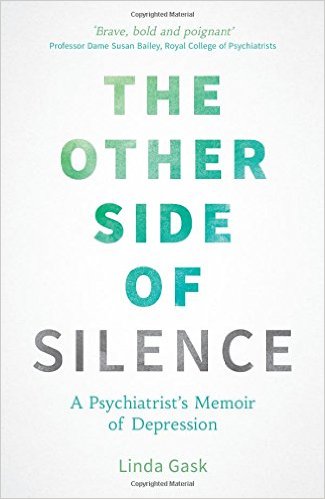
So opens a new book by Dr. Linda Gask, a British psychiatrist. This Week’s Reading: an exclusive excerpt from The Other Side of Silence: A Psychiatrist’s Memoir of Depression, which was just published by Summersdale Publishers Ltd.

otherside

This Reading is the third part in a three-part series on depression.

Two weeks ago: a look at better psychopharmacological management.

Last week: consideration of better treatment in the primary care setting.

This Week: a look at the burden of illness on the patient and the psychiatrist.

(And this isn’t Mad Men Season 4. Miss a week and you aren’t lost.)

Dr. Gask has had a remarkable career. Beyond clinical work, she’s had a sparkling academic career, with a focus on mental-health policy and practice. She’s published papers and book chapters; she’s trained residents; she’s lectured all over the world. She was a Harkness Fellow at the Group Health Research Institute in Seattle, Washington. And she has also worked as a consultant for the World Health Organization and with the World Psychiatric Association.

GaskDr. Linda Gask

Continue reading

Reading of the Week: Depression and Primary Care (Depression: Week 2 of 3)

Depression is a common psychiatric disorder and a major contributor to mortality and morbidity worldwide. Over the past decade in Sweden, work absence because of mental ill health has risen markedly and depression is a major factor. Substantial societal costs are associated with the disorder, which affects up to 15% of the population at any one time and tends to be recurrent. There are compelling reasons to investigate alternative treatments for depression. Although effective treatments exist, most people with the disorder never seek professional help. Among those that do, only half appear to benefit. Adherence with medication is often poor and waiting times for cognitive–behavioural therapy (CBT) can be lengthy, resulting in more entrenched symptoms and a worse long-term prognosis. As general medical practitioners are frequently the main care providers for depression, treatment options that are non-stigmatising, have few side-effects and can readily be prescribed in community healthcare settings are needed.

So begins a new paper that considers depression treatment in Sweden. These issues sound very familiar. Reading over this list of problems – the burden of illness, the inaccessibility of care, etc. – we could replace Sweden with Canada. And that’s why this paper is so relevant to us.

This week’s Reading: “Physical exercise and internet-based cognitive–behavioural therapy in the treatment of depression: randomised controlled trial” by Mats Hallgren et al., which was just published in the British Journal of Psychiatry.

Mats Hallgren

A quick summary: this is a smart paper seeking ways to improve the treatment of depression in the primary care setting. How to achieve better results? Hallgren et al. consider exercise and Internet-based CBT, and compare such interventions to the usual care. Continue reading

Reading of the Week: Immigration and Psychosis (and Canada)

Meta-analytic reviews suggest that international migrants have a two to threefold increased risk of psychosis compared with the host population, and the level of risk varies by country of origin and host country. This increased risk may persist into the second and third generations. Incidence rates are not typically found to be elevated in the country of origin; therefore it is believed that the migratory or postmigration experience may play a role in the etiology.

The migration-related emergence of psychotics disorders is a potential concern in Canada, which receives 250,000 new immigrates and refugees each year. However, there is a notable lack of current epidemiological information on the incidence of psychosis among these groups.

So begins a new paper that seeks to answer a basic question: are there certain migrant groups more at risk of psychotic disorders in Canada?

This week’s Reading: “Incidence of psychotic disorders among first-generation immigrants and refugees in Ontario” by Kelly K. Anderson et al., which was published in the CMAJ in June.

Kelly K. Anderson

Of course, studying the incidence of psychotic disorders in immigrant populations isn’t exactly novel – there is a rich literature in this field. And the Canadian angle isn’t novel either – as the paper points out, previous studies have considered B.C. hospital admission rates for schizophrenia in European migrants in the early 1900s.

But this paper aims to consider recent data and Canadian data – relevant in a country that takes in 250,000 migrants a year. The paper focuses on Ontario, where first generation migrants constitute almost a third of the population.

Continue reading

Reading of the Week: Is CBT Losing Its Effectiveness? The Johnsen and Friborg Paper

Depressive disorders (DDs) can be highly disabling and are ranked third in terms of disease burden as defined by the World Health Organization, and first among all psychiatric disorders in terms of disability adjusted life years. In addition, DDs seem to be rising globally, and a 20% annual increase in its incidence has been predicted. Improvements in treatment methods and prevention measures, and the availability of community psychiatric services are, therefore, as important as ever before.

So begins, without much controversy, this week’s Reading – which happens to be one of the most controversial papers of the year.

This meta-analysis has been mentioned in newspapers and blogs. No wonder – in 22 pages, it raises questions about the effectiveness of a major psychiatric treatment: cognitive behavioural therapy.

The Reading: “The Effects of Cognitive Behavioral Therapy as an Anti-Depressive Treatment is Falling: A Meta-Analysis” by Tom J. Johnsen and Oddgeir Friborg, recently published in the prestigious Psychological Bulletin.

The full paper can be found here:

https://uit.no/Content/418448/The%20effect%20of%20CBT%20is%20falling.pdf

Tom J. Johnsen

A quick summary: analyzing data from 70 studies over nearly four decades, Johnsen and Fribourg find CBT to have become less effective at reducing depressive symptoms. Continue reading

Reading of the Week: Housing First and At Home/Chez Soi

Homelessness is a significant social problem in Toronto, Canada’s largest and most ethnically diverse urban center, where approximately 29,000 individuals use shelters each year and roughly 5,000 people are homeless on any given night.

So opens this week’s Reading. The sentence is simple and direct; the facts conveyed are haunting. But this week’s Reading is ultimately a good news story. Actually, it’s a very good news story.

The Reading: “Effectiveness of Housing First with Intensive Case Management in an Ethnically Diverse Sample of Homeless Adults with Mental Illness: A Randomized Controlled Trial” by Vicky Stergiopoulos et al., which has just been published in PLOS ONE.

Dr. Vicky Stergiopoulos

Here’s a quick summary: offer the homeless housing, and they not only gain housing stability but end up drinking less and are hospitalized less. Continue reading

Reading of the Week: Psychiatry’s Identity Crisis

American psychiatry is facing a quandary: Despite a vast investment in basic neuroscience research and its rich intellectual promise, we have little to show for it on the treatment front.

With few exceptions, every major class of current psychotropic drugs — antidepressants, antipsychotics, anti-anxiety medications — basically targets the same receptors and neurotransmitters in the brain as did their precursors, which were developed in the 1950s and 1960s.

Sure, the newer drugs are generally safer and more tolerable than the older ones, but they are no more effective.

So begins this week’s Reading, which considers the state of psychiatry, and psychiatric research funding.

Here’s a quick summary: the author suggests that the neuroscience revolution is something of a bust and that psychotherapies are worthy of more study and use. This may seem like a strong argument. And it is – particularly given the bias of the author, who is, by his own description: “a psychiatrist and psychopharmacologist who loves neuroscience.”

This week’s Reading: “Psychiatry’s Identity Crisis” by Weill Cornell Medical College’s Richard A. Friedman was recently published by The New York Times.

The article can be found here:

www.nytimes.com/2015/07/19/opinion/psychiatrys-identity-crisis.html

Dr. Richard A. Friedman

Continue reading

Reading of the Week: ADHD and Overdiagnosis

Overdiagnosis in psychiatry occurs where patients are identified with a mental disorder when they do not have significant impairment and would not be expected to benefit from treatment. These problems can arise even when diagnostic criteria are met, that is, in the presence of milder symptoms that fall close to, or within, a normal range on a diagnostic spectrum. Overdiagnosis can lead to unnecessary labelling, unneeded tests, unnecessary therapies, and inflated health care costs. In medicine, with the best of intentions, practice has come to favour more tests and more treatments, all of which tend to drive overdiagnosis. This problem may be worsened by a prevailing cultural ethos that more is better.

Outside of psychiatry, there are clear examples of overdiagnosis. For example, screening programs designed to detect early stages of certain cancers appear to increase incidence estimates, but may have no discernable effect on mortality…

Psychiatry has followed this trend. It has been estimated that at least 40% to 50% of the population will meet criteria for at least 1 psychiatric diagnosis during their lifetime. The current system of nosology in psychiatry, based on phenomenology, that is, subjective reports and clinical observations, encourages overdiagnosis. The presence or absence of mental disorders is not defined by biomarkers, allowing diagnostic constructs to describe broad spectra that cross over into normality.

So begins a short, sharp article on overdiagnosis in psychiatry that has just been published. The authors raise significant issues about psychiatry in general and adult ADHD in particular – they argue that the DSM diagnosis is flawed and impractical; they take aim at patients (yes, patients); they then turn their sites on researchers and industry.

The comments of sensational journalists? The skewed opinion of Scientologists on a blog? Actually, the Reading comes from the pages of The Canadian Journal of Psychiatry and, for the record, the paper’s first author is one of the most prominent psychiatrists in the country; Dr. Joel Paris is the past chair of McGill’s Department of Psychiatry and the author of more than a dozen books.

This week’s Reading: “Is Adult Attention-Deficit Hyperactivity Disorder Being Overdiagnosed?” by Paris et al.

Here’s the link:

http://www.ncbi.nlm.nih.gov/pubmed/26175391

The Canadian Journal of Psychiatry has always been worth reading, but its new editor, Dr. Scott Patten, has taken this journal to the next level. And, in my opinion, this “perspective” paper is a must-read – one of the most important papers written this year. Continue reading

Reading of the Week: Suicide and Religion

The relationship between religion and suicide was first established in Emile Durkheim’s 19th-century seminal treatise. This has since been corroborated in different countries,most recently by Swiss researchers who used a year 2000 census-based cohort study to show that such risk patterns still persisted, with risk highest for those with no religious affiliation, lowest for Roman Catholics and intermediate for Protestants. Why religion should exhibit this protective effect is less clear: Durkheim attributed it to the sense of community that arises from active church membership, with attendance the most commonly cited attribute. Others, however, emphasise the moral and religious objections to suicide,although Durkheim was at pains to rule this out as an explanation. Perhaps a more pertinent question is why, given increasing societal secularisation, does the relationship between religion and suicide still seem to persist? Increasing secularization is also evident in Switzerland, where by the end of the 1990s nonpractising Christians made up almost half the population, and a further 11% cited no religious affiliation. This has led many social researchers, including some in Switzerland, to conclude that affiliation bears little correspondence to religious belief or practice but is more likely to reflect a diverse set of traditions or social convenience.

So begins a new paper from the British Journal of Psychiatry looking at what seems to be a very old and established relationship: religion and suicide. This is heavily treed ground, as the above quotation suggests, with work going back to Durkheim’s 1897 book.

Emile Durkheim

I remember medical school and residency conversations on this topic of religion and suicide, referencing Durkheim. Though people debated the reasons, this much seemed to be taken for granted: religion bestows a protective quality on its followers. For Durkheim, the thinking was that church attendance – highest among the Catholics – provided the advantage.

In “Religion and the risk of suicide: longitudinal study of over 1 million people,” Dermot O’Reilly and Michael Rosato focus on Northern Ireland, drawing on census data.

Dr. Dermot O’Reilly

It’s a short, clever study. It also raises a simple question: is Durkheim’s thinking dated?

Continue reading

Reading of the Week: NEJM and Smoking Cessation

More than 50 years after the release of the first Surgeon General’s report on the harmful effects of smoking, national policies, behavioral programs, and pharmacologic approaches have helped reduce smoking rates in the United States. However, the need for new approaches is clear because smoking remains the leading cause of preventable illness and death.

So begins a big paper from The New England Journal with a simple aim: getting people to butt out. It raises two important questions: If we are serious about promoting smoking cessation, are we willing to put ‘our money where our mouth is’ – literally? And how could we do this?

“Randomized Trial of Four Financial-Incentive Programs for Smoking Cessation” by Dr. Scott D. Halpern et al. is this week’s Reading; it has just been published.

Though other papers have been written on this topic, the Halpern et al. paper is clever and interesting – and the results are surprising.

And, don’t tell the editors of The New England Journal of Medicine: the results are also disappointing. Continue reading

Reading of the Week: Choosing Wisely and Psychiatry

The routine use of antipsychotics, like Zyprexa (olanzapine) and Seroquel (quetiapine), should not be used to treat primary insomnia in children, adults or the elderly, say Canadian psychiatrists. This information is part of a series of 13 evidence-based recommendations made by the Canadian Psychiatric Association (CPA) and its working group partners, the Canadian Academy of Child and Adolescent Psychiatry (CACAP) and the Canadian Academy of Geriatric Psychiatry (CAGP), for the Choosing Wisely Canada campaign.

Choosing Wisely Canada (CWC) is a campaign to help physicians and patients engage in conversations about unnecessary tests, treatments and procedures, and to help physicians and patients make smart and effective choices to ensure high-quality care.

So begins the press release announcing the 13 recommendations made jointly by these three bodies as part of Choosing Wisely Canada.

The full list is this week’s Reading, and “Thirteen Things Physicians and Patients Should Question” can be found here:

http://www.choosingwiselycanada.org/recommendations/psychiatry/

Choosing Wisely is a good campaign – thoughtfully done and executed. It ultimately aims to better patient care. It’s also important within the context of the larger system itself. Continue reading