From the Editor
These medications are widely discussed – and, yes, our patients ask about them. But how do glucagon-like peptide 1 receptor agonists impact mental health and overall wellness? Should we hesitate before reaching for the prescription pad?
Aureliane C. S. Pierret (of King’s College London) and her co-authors attempt to answer these questions in a new paper just published in JAMA Psychiatry. In their systematic review and meta-analysis, they included more than 107 000 patients, comparing treatment with GLP1-RAs to placebo, looking at psychiatric, cognitive, and quality of life outcomes in those who are overweight, obese, or have diabetes. “Our results provide reassurance regarding the psychiatric safety profile of GLP1-RAs and suggest that GLP1-RA treatment is associated with improved mental well-being, in addition to the known physical health improvements.” We consider the paper and its implications.

When we hear innovations in mental healthcare, we tend to think of apps or wearables. In the second selection from Quick Takes, Daisy Singla (of the University of Toronto) discusses her recent study that expanded access to psychotherapy for perinatal women, reducing symptoms of depression and anxiety by drawing a page from work done in low-income countries. The key concept: training up laypeople to deliver therapy (task sharing). “It’s one of the largest psychotherapy trials in the world.”
And in the third selection, from The Globe and Mail, Joe Lee writes about his realization that he has depression and that it has affected his life for years. In a personal essay, he talks about his illness and the impact on his life. “Depression is weird like that. For some people, it sneaks in. For me, it’s always been there – like blood in my body.”
DG
Selection 1: “Glucagon-Like Peptide 1 Receptor Agonists and Mental Health: A Systematic Review and Meta-Analysis”
Aureliane C. S. Pierret, Yuya Mizuno, Pippa Saunders, et al.
JAMA Psychiatry, 14 May 2025 Online First

People living with obesity and/or diabetes are at higher risk of psychiatric morbidity. Compared with the general population, people with type 2 diabetes are twice as likely to have depression, with even higher rates in type 1 diabetes. A bidirectional relationship between metabolic and psychiatric conditions is observed; people living with obesity are at 55% increased odds of developing depression, and depression increases odds of developing obesity by 58%. Furthermore, psychiatric comorbidity worsens diabetic outcomes, including lower adherence to diabetes treatments, poorer glycemic control, and increased diabetic complications…
Glucagon-like peptide 1 receptor agonists (GLP1-RAs) are highly effective novel treatments for obesity and type 2 diabetes, with evidence of effect also observed in type 1 diabetes. An emerging body of preclinical and clinical evidence suggests that GLP1-RAs may also improve psychiatric, QOL, and cognitive outcomes. Thus, GLP1-RAs may improve both the physical and emotional well-being of people with metabolic disorders. Despite this, only 3 previous meta-analyses of randomized clinical trials (RCTs) have examined their psychiatric effects. One reported only depression outcomes, showing that in a pooled sample of 2071 patients, GLP1-RA treatment was associated with a reduction in depressive symptoms compared with other glucose-lowering agents in type 2 diabetes but was limited by use of observational data and heterogenous study populations. The second focused on psychiatric outcomes associated with the GLP1-RA liraglutide compared with placebo for the treatment of obesity; although it deemed liraglutide to have a safe neuropsychiatric profile, a numerical increase in suicidal ideation and behavior in the liraglutide group was observed.
So begins a paper by Pierret et al.
Here’s what they did:
- They conducted a systematic review and meta-analysis.
- They drew on several databases, including PubMed, and included “double-blind RCTs investigating treatment with any GLP1-RA, comparing the intervention with placebo, in adults (age ≥18 years) with diabetes and/or overweight (body mass index [BMI] ≥25, calculated as weight in kilograms divided by height in meters squared) or obesity (BMI ≥30), where treatment was not limited to single-dose interventions.”
- Also – “Studies were included if they reported rates of adverse psychiatric events or changes in psychiatric symptoms, health-related QOL, or cognition using validated scales.”
- Data extraction was performed by two reviewers.
- Statistical analyses were done, including random-effects meta-analysis.
Here’s what they found:
- From the original search (identifying almost 20 000 papers), they included 99 randomized clinical trials in the systematic review and 80 (involving 107 860 patients) in the meta-analysis.
- Demographics and illness experience. The mean age of participants across studies in the meta-analysis was 60.1 years. Most participants were male (59.9%). The study population included patients with type 2 diabetes (62% of studies), overweight/obesity (29%), and type 1 diabetes (9%).
- Psychiatric events. GLP1-RA treatment was not associated with a significant difference in risk of serious psychiatric adverse events (log[RR] = −0.02) and nonserious psychiatric adverse events (log[RR] = −0.03), or depressive symptom change (g = 0.02), compared with placebo. (!)
- Eating and QOL. GLP1-RA treatment was associated with improvements in restrained eating (g = 0.35) and emotional eating behavior (g = 0.32) and in mental health–related QOL (g = 0.15), physical health–related QOL (g = 0.20), and diabetes-related QOL (g = 0.23).
- Cognition. There was no association between GLP1-RA treatment and change in global/composite cognition compared with placebo (g = 0.01).
- Quality of studies. Heterogeneity was low to moderate, with low risk of publication bias.
A few thoughts:
1. This is a solid paper published in a major journal.
2. The main finding in a sentence: “In patients with overweight/obesity and/or diabetes, GLP1-RA treatment is not associated with increased risk of psychiatric adverse events or worsening depressive symptoms relative to placebo and is associated with improvements in QOL, restrained eating, and emotional eating behavior.”
3. To state the obvious: the result is reassuring.
4. As the authors point out, it’s also consistent with earlier work. They note “a recent post hoc analysis of 4 placebo-controlled trials of semaglutide in people with overweight/obesity, which showed no difference in depression severity or suicidal ideation/behavior compared with placebo.”
5. Remember though the participants who were included (people with obesity/overweight or diabetes) and those who weren’t (people with major mental illness). The authors write: “because a preexisting serious psychiatric diagnosis, including major depressive disorder, suicidality, and BED, was invariably an exclusion criterion for included RCTs, it is unknown if results from this meta-analysis can be applied to psychiatric patient populations, which limits generalizability of the results to all patients with overweight/obesity and diabetes.” (!!)
The full JAMA Psychiatry paper can be found here:
https://jamanetwork.com/journals/jamapsychiatry/article-abstract/2833558
Selection 2: “An innovation in perinatal mental healthcare”
Daisy Singla
Quick Takes, 28 May 2025

In this episode of Quick Takes, I speak with Daisy Singla, a senior scientist at CAMH and the first womenmind™ scientist there. In our interview, we discuss how the gold standard of care is inaccessible for many North American women and her attempts to address that with SUMMIT.
Here, I highlight several comments:
On the study
“The SUMMIT Trial is a large, multi-site psychotherapy trial in which we aimed to examine two questions: is telemedicine delivered psychotherapy as effective as in-person psychotherapy? And can non-specialist providers – meaning individuals with no prior experience or formal training in mental health care – deliver psychotherapy as effectively as specialist providers, namely psychiatrists, psychologists, and social workers?
“We focused on pregnant and postpartum populations with depression and anxiety because we know that prevalence rates of depression and anxiety are very high in this group. And by offering treatment to this population, there’s actually a cost savings of almost $2 billion a year just in Canada alone.”
On the interventions
“Everyone received the same eight session behavioural activation psychotherapy. The mantra of behavioural activation in a nutshell is: in order to feel differently, you need to do differently. And so it’s really the B in CBT. And it’s been shown to be one of the most effective first-line psychological treatments out there… Around the world, non-mental health specialists have been trained to deliver this intervention. So, it seemed like a no brainer to offer this treatment when we were trying to tackle scalable ways of improving access to psychotherapy.”
On the results
“What we showed: not only did non-specialists do just as well as specialist providers and telemedicine did just as effective as in-person, but both groups went from, on average, moderate levels of symptoms to sub-threshold symptoms. And not just for depression, but also for symptoms of anxiety, for trauma, which we didn’t expect, and equally high levels of client satisfaction, therapeutic alliance, patient activation levels and perceived levels of support.”
On task sharing
“Our goal is not to replace specialist providers. Our goal is to address the significant and growing treatment gap for these conditions.”
On surprises
“One of the things that we were pleasantly surprised about was that amongst the 1 200 participants who were recruited, almost 50% of them identified as Black, Indigenous or Persons of Colour, which we don’t typically see in psychotherapy trials. That has to do with the strong partnerships that we had with patient advocates and community partners, to ensure that recruitment were not within the confinements of our academic centres…”
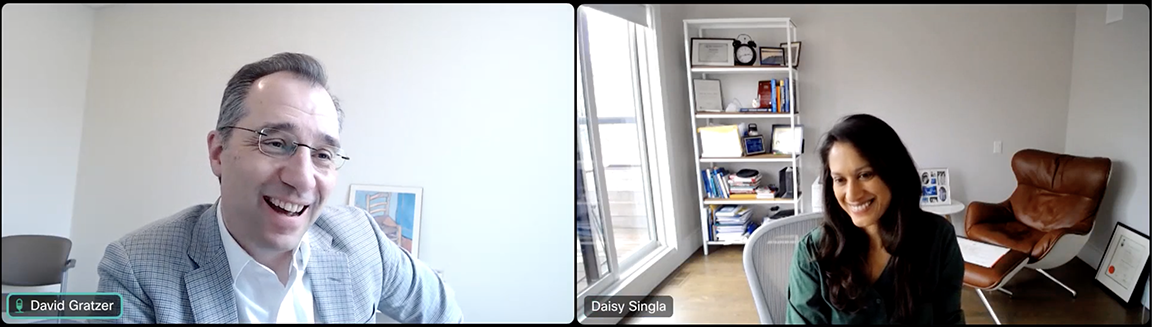
The above answers have been edited for length.
The podcast can be found here, and is just over 14 minutes long:
Selection 3: “I didn’t know I was depressed – I just thought that was me”
Joe Lee
The Globe and Mail, 28 April 2025

I turned 41 this year. And somewhere between 39 and 41, I realized something that’s hard to admit and even harder to explain: I’ve probably been depressed for most of my life.
That might sound dramatic. It’s not like I came out of the womb sighing. But honestly, I can’t remember a version of myself that wasn’t carrying something heavy. As a kid growing up in Hong Kong, I didn’t think of myself as depressed. That low, grey feeling just felt like my default setting – like it was baked into my personality. I didn’t question it. I didn’t even know life could feel different. It was like the humidity in July or the constant buzz of the Mong Kok neighbourhood – just part of the atmosphere I lived in.
So begins an essay by Lee.
He notes that his move to Toronto didn’t fundamentally change how he felt; he realized he had depression. “Not something that arrived after a bad breakup or a job loss, but something that’s been running through me since the moment I started noticing the world. At times, it felt like invisible chains – not enough to crush me, just tight enough to make everything harder. You learn to live with it. You even learn to joke about it. But deep down, you know you’re dragging something no one else can see.”
Things get worse. “Two years ago, everything caught up to me. Full system crash. I burned out, broke down and finally stopped pretending I was fine.” He discusses taking time to work on his health, including leaving his job. “The recovery wasn’t magical. There were heavy meds, roller coaster moods, long days of insomnia and longer nights of wondering if I’d ever feel normal again. But toward the end of that nine-month stretch, I felt something I’d never really felt before: I actually felt better. Steadier. Lighter. Like maybe life didn’t have to be so hard.”
“But depression doesn’t work like Yelp reviews. There’s no clean measurement. Even the people who live with it don’t always know how to rate their own pain. It’s not like a broken arm you can point to. Sometimes the ache is everywhere. Sometimes it’s nowhere. Sometimes you’re fine until you’re not.”
Now, feeling better, he contemplates how to live his life, deciding that he’s like to give back. “My courage to reclaim this final chapter of life comes from a simple wish: to give something back.”
He adds: “For my mom – my dad died when I was still in secondary school. For my younger sister and brother. I love them deeply. And I know I never really showed up the way an eldest son or big brother should – not because I didn’t want to, but because I was living under a shadow too heavy to lift.”
A few thoughts:
1. This is a good essay.
2. As stigma fades, more people are reaching out for help. But how many Lees remain in the community, in need of help but not realizing it? How can we better reach them?
3. This is a great line, worth repeating: “But depression doesn’t work like Yelp reviews.”
The full Globe essay can be found here:
Reading of the Week. Every week I pick articles and papers from the world of Psychiatry.
Recent Comments