From the Editor
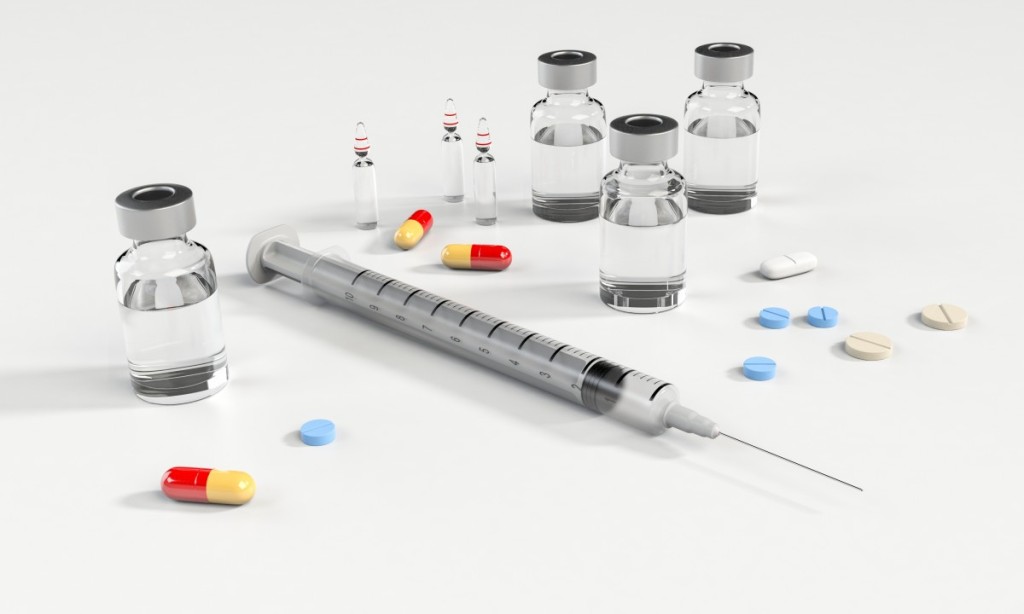
Substance work can be lifesaving. But it’s also challenging, as many patients continue to misuse illicit drugs or drop out of care or both. Evidence supports using incentives, including financial ones, to nudge patients toward sobriety. This approach, known as contingency management, includes tools such as vouchers and prizes.
But what forms of nudging work best? And how much of a financial incentive is needed? In a new JAMA Psychiatry paper, Carla J. Rash (of the University of Connecticut) and her co-authors attempt to answer these questions by looking at contingency management. In a systematic review, they drew on 112 protocols from 77 studies, analyzing types of nudges like vouchers (which may be exchangeable for, say, retails items) and prizes (a chance to win things like gift cards) and the amounts of money involved. The authors walk on a familiar path – the literature goes back four decades – but provide a meaningful update. “Based on these findings, weekly incentive magnitude estimates are $128/week for voucher protocols and $55/week for prize-based protocols.” We consider the paper and its implications.

ChatGPT is the most downloaded app in history with people using it for everything from finding recipes to writing emails. How could generative AI be used for mental health? In a perspectives paper for The Lancet, Drs. John Torous (of Harvard University) and Eric J. Topol (of the Scripps Research Translational Institute) discuss this important and timely topic. “Despite considerable promise, research is still required to establish AI’s benefit and safety for promoting mental health.”
And in the third selection from Academic Psychiatry, Dr. Ariel E. Wilson, a resident of psychiatry at Kaiser Permanente Oakland, writes about patient rights, certifiability, and the weight of making good decisions. The author asks if psychiatrists need to have thick skin. “The challenge in psychiatry lies in finding a balance – creating our own semi-permeable membrane that allows us to protect ourselves from feeling the sting of every emotion we encounter, while also maintaining empathetic and trusting relationships with our patients.”
DG
Recent Comments