Tag: MST

Reading of the Week: MST vs ECT for Bipolar Depression – the New AJP Study; Also, Unhappiness & Psychiatry, and Thorpe on Her Postpartum Psychosis

From the Editor

The manic episodes had been destructive, if short-lived, damaging her relationships and leaving her in debt. But the depressive episodes sat on her for years, leaving her demoralized and feeling hopeless. Will I ever get better? Like many, my patient found that bipolar depression could be hard to treat. She hesitated on ECT, worrying about the cognitive effects. 

Is there an alternative? In a new American Journal of Psychiatry paper, Dr. Daniel M. Blumberger (of the University of Toronto) and his colleagues attempt to answer that question. They report on a double-blind, randomized, parallel-group pilot clinical trial comparing ECT and magnetic seizure therapy (MST), a newer neuromodulation technique that uses a magnetic field to induce a seizure. The study included 55 people. “Relative to ECT, MST demonstrated similar clinical outcomes and greater cognitive safety.” We consider the study and its implications.
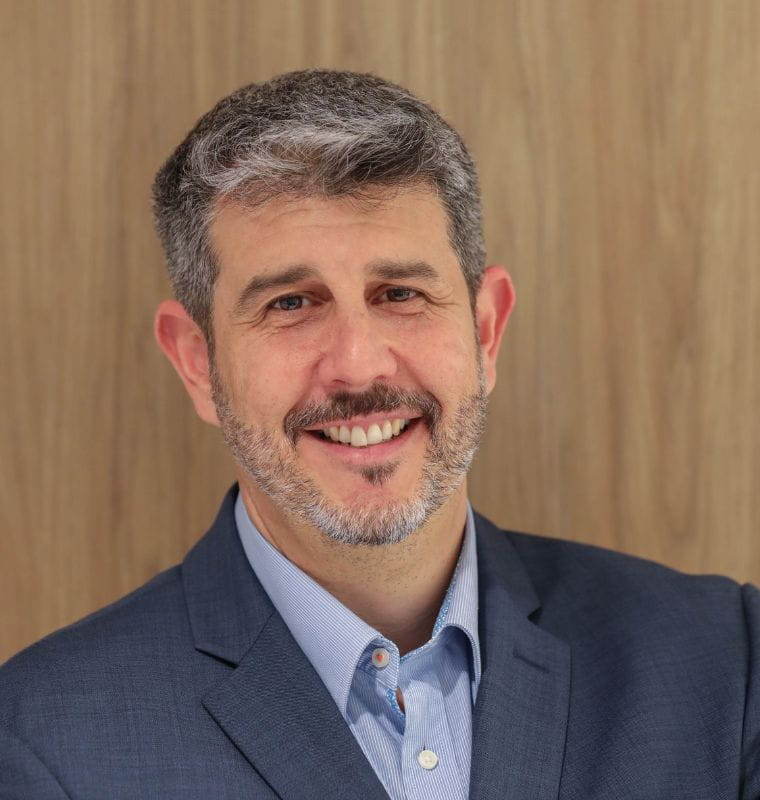
Daniel M. Blumberger

In the second selection, Dr. Carlos De las Cuevas (of the University of La Laguna) wonders if psychiatry is becoming “the science of unhappiness.” He worries that it is. “Poverty, injustice and loneliness shape mental health, but they are not mental illnesses. At the same time, clinicians cannot bracket out the social world from their practice, nor should they.”

And, in the third selection, Hilary Thorpe writes about postpartum psychosis in The Globe and Mail. The essay is personal, drawing on her experiences with the illness and her recovery. “Lindsay Clancy’s story reminds me how close my life came to going another way, and how fortunate I am that I got help when I needed it.”

Note: There will be no Reading for the next two weeks.

DG

Continue reading

Reading of the Week: MST vs ECT – the New Lancet Psychiatry Paper; Also, the First AI Drug Prescriber and Dr. Taglienti on Her Cancer & Her Career

From the Editor

He began to respond to ECT and felt less depressed than he had in many years. But as the treatments continued, my patient noticed gaps in his memory including family vacations when his children were young. “Those memories are precious.” He stopped ECT and, soon after, was deeply depressed again. 

Smaller studies suggest that Magnetic Seizure Therapy (MST) – where alternating magnetic fields induce seizures – offers relief to patients without the cognitive problems of ECT. In a new study published by The Lancet Psychiatry, Dr. Daniel M. Blumberger (of the University of Toronto) and his co-authors add to the literature with the largest randomized trial comparing these convulsive therapies conducted and the first non-inferiority clinical trial to address efficacy. The study involved 239 participants with depression. “MST showed non-inferior efficacy relative to… ECT in achieving remission of depression, and a more favourable cognitive safety profile.” We consider the paper and its implications.

Should patients receive prescriptions from an AI prescriber? In the second selection, from JAMA, Dr. Daniel G. Aaron (of the University of Utah) and Christopher Robertson (of Boston University) look at a new Utah program allowing AI to prescribe medications without physician involvement. They are cool to the idea. “Although AI offers the promise of increased efficiency and expanded access, the evasion of legal obligations by early movers raises profound concerns. Incorporating AI into modern health care must be evidence based and responsible.”

And in the third selection, Dr. Jenna Taglienti (of Hofstra University) writes personally about her cancer in JAMA. As a psychiatrist and a residency program director, she finds meaning in her work – but illness helps her gain perspective. “Medicine can have extraordinary meaning. But it cannot substitute for being present in your own life.”

DG

Continue reading

Reading of the Week: MST vs ECT – the new JAMA Psych Study; Also, Dr. Niall Boyce on Frasier and the Latest in the News

From the Editor

Electroconvulsive therapy, or ECT, is a highly effective treatment for depression. But patients often complain about side effects, including cognitive problems.

Could magnetic seizure therapy, or MST, provide the benefits of ECT without these issues? In a new paper for JAMA Psychiatry, Zhi-De Deng (of Duke University) and co-authors attempt to answer that question. In a study where 73 patients with depression were given ECT or MST, they found similar results. “This randomized clinical trial found that the efficacy of MST was indistinguishable from that of ultrabrief pulse [right unilateral] ECT, the safest form of ECT currently available.” We consider the paper and its implications.

In the second selection, Dr. Niall Boyce (of the Wellcome Trust) mulls the return of Frasier Crane, the “pompous but kind-hearted American psychiatrist.” In a Lancet perspective, he writes about the original TV comedy and the new revival of Frasier – and also notes the change in perception of psychiatry over the years. His assessment of the show: “Is the new Frasier worth watching? On the early evidence, I would say yes.”

And, finally, we explore the latest in the news with consideration of recent articles from The Globe and Mail and other publications. Among the topics: the (over) prescription of antidepressants, safe supply, and hairdressers and psychotherapy in Togo.

DG


Continue reading