Tag: Wilson

Reading of the Week: Cannabis – the New Lancet Psych Paper; Also, the Skepticism of Joel Paris and Mania & the Law

From the Editor

What do you say to your patient when he insists that cannabis is helping him with his mental disorder? What is the evidence?

Of course, many papers have been published on the topic. That said, Jack Wilson (of The University of Sydney) and his co-authors contribute nicely to the literature with their new systematic review and meta-analysis – arguably the most comprehensive to date – published in Lancet Psychiatry. 54 RCTs were included, involving almost 2 500 participants, including those with depression and PTSD. “Given the scarcity of evidence, the routine use of cannabinoids for the treatment of mental disorders and substance use disorders is currently rarely justified.” We discuss the paper and its implications.

What happens to your view of our field after five decades spent treating tens of thousands of patients, leading major institutions, and authoring dozens of books and papers? In a new episode of Quick Takes, Dr. Joel Paris, former chair of the Department of Psychiatry at McGill University and a self-proclaimed skeptic, discusses the past, present, and future of psychiatry. Never one to shy away from sharing his controversial views, Dr. Paris dives into his thoughts on the DSM system (he’s not a fan) and what he sees as “fads and facilities” – such as the overdiagnosis of adult ADHD, trauma, and autism. “Over time, my perspective on psychiatry has changed in the direction of greater skepticism.”

Finally, in the third selection from The Canadian Journal of Psychiatry, Drs. Kenya A. Costa-Dookhan and Andrew Lustig (both of the University of Toronto) discuss what to do when a patient doesn’t meet criteria for an involuntary admission but isn’t well. Drawing on a case involving a patient experiencing a manic episode, they offer three strategies. “When mania outruns the law, our task is to accompany our patients with clarity, compassion, and collective integrity, not toward cure, but toward the next opportunity for care.”

DG

Continue reading

Reading of the Week: Nudging Sobriety – the New JAMA Psych Paper; Also, Torous & Topol Weigh Generative AI and Wilson on Thick Skin

From the Editor

Substance work can be lifesaving. But it’s also challenging, as many patients continue to misuse illicit drugs or drop out of care or both. Evidence supports using incentives, including financial ones, to nudge patients toward sobriety. This approach, known as contingency management, includes tools such as vouchers and prizes.

But what forms of nudging work best? And how much of a financial incentive is needed? In a new JAMA Psychiatry paper, Carla J. Rash (of the University of Connecticut) and her co-authors attempt to answer these questions by looking at contingency management. In a systematic review, they drew on 112 protocols from 77 studies, analyzing types of nudges like vouchers (which may be exchangeable for, say, retails items) and prizes (a chance to win things like gift cards) and the amounts of money involved. The authors walk on a familiar path – the literature goes back four decades – but provide a meaningful update. “Based on these findings, weekly incentive magnitude estimates are $128/week for voucher protocols and $55/week for prize-based protocols.” We consider the paper and its implications. 

ChatGPT is the most downloaded app in history with people using it for everything from finding recipes to writing emails. How could generative AI be used for mental health? In a perspectives paper for The Lancet, Drs. John Torous (of Harvard University) and Eric J. Topol (of the Scripps Research Translational Institute) discuss this important and timely topic. “Despite considerable promise, research is still required to establish AI’s benefit and safety for promoting mental health.”

And in the third selection from Academic Psychiatry, Dr. Ariel E. Wilson, a resident of psychiatry at Kaiser Permanente Oakland, writes about patient rights, certifiability, and the weight of making good decisions. The author asks if psychiatrists need to have thick skin. “The challenge in psychiatry lies in finding a balance – creating our own semi-permeable membrane that allows us to protect ourselves from feeling the sting of every emotion we encounter, while also maintaining empathetic and trusting relationships with our patients.”

DG

Continue reading

Reading of the Week: Can Psychotherapy Help Inpatients? Why did Michael Wilson Speak Out? Are Patients Experts?

From the Editor

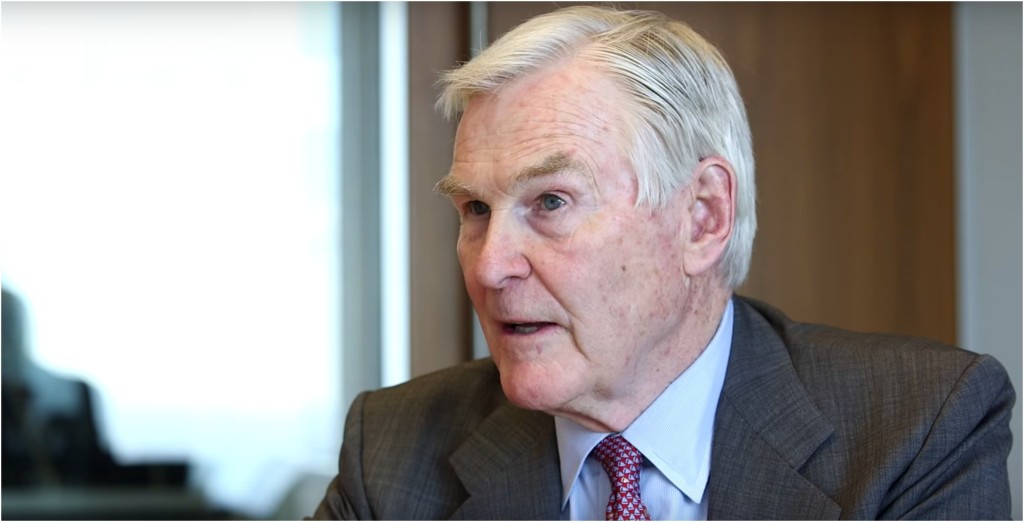
Almost two decades ago, I was invited to a conference. The keynote speaker was Michael Wilson, the former federal Minister of Finance, who died earlier this month. I remember two things about this presentation: first, the audience was perfectly still – as Wilson spoke about his son’s suicide, no one shuffled her papers or chatted with his neighbour; second, I remember thinking how unusual this presentation was: he spoke about suicide at a time when suicide wasn’t discussed.

This week, we look at three selections, including an interview in which Wilson discusses his decision to speak out.

We also consider two other pieces: a new study on psychotherapy for inpatients with depression and an essay considering whether patients are experts.

pjimage-11Michael Wilson

Enjoy.

And I hope you will take a few minutes to complete our survey, aimed at improving the Readings.

https://www.surveymonkey.com/r/GP5XXMB

DG

Continue reading

Reading of the Week: First Episode Psychosis and Access – The Anderson-Kurdyak Paper, and More

From the Editor

“If your son or daughter had cancer or diabetes, do you think it would be reasonable for them to wait? I don’t think it’s any different for mental illness.”

Access. It’s one of the biggest problems with mental health services.

How big is the access problem? What can be done about it?

This week, we consider a new paper looking at access and first episode psychosis. Dr. Paul Kurdyak, a CAMH psychiatrist and a program lead with the Institute for Clinical Evaluative Sciences, made the above comment to the CBC when discussing this new paper. In it, Kelly Anderson and Dr. Kurdyak find that 40% of patients didn’t receive physician follow-up in the month after diagnosis. Imagine – tying back to Dr. Kurdyak’s comment – if 40% of young patients with leukemia didn’t have physician follow-up in a month after their cancer diagnosis.

We also look at the discussion around a new federal-provincial accord with an op ed written by Michael Wilson, the chair of the Mental Health Commission of Canada – particularly timely as the ministers of health met this week with an eye on a new accord.

DG Continue reading