Tag: CBT

Reading of the Week: Cancer & Suicide & Good News – the New Transl Psychiatry Study; Also, AI & Therapy Dropouts, and Bland on Her Father & His D-Day

From the Editor

He was so overwhelmed by the cancer diagnosis that he didn’t eat or sleep for days. “It was my worst nightmare.” My patient isn’t alone in that devastating experience, of course – the diagnosis and treatment of cancer is a major life event. Not surprisingly, the suicide rate is roughly double that of the general population in the United States. But with increasing psychosocial interventions, how has this changed over time?

In the first selection, Qiang Liu (of the Chinese Academy of Medical Sciences) and his co-authors attempt to answer that question in a new paper for Translational Psychiatry. Drawing on 40 years of data and a major US database, they analyzed the journeys of five million cancer patients, discovering good news. “We revealed a gradual increase in cancer-related suicide rates from 1975 to 1989, followed by a gradual decrease from 1989 to 2013, and a marked decrease from 2013 to 2017.” Indeed, between 2013 and 2017, the rate dropped by 27%. We consider the paper and its implications.

In the second selection, Sakiko Yasukawa (of the Sony Corporation) and her co-authors aimed to reduce dropouts from psychotherapy using AI. In a new paper for BMJ Mental Health, they describe an RCT involving 149 people. “The results suggest that the personalised messages sent by the chatbot helped participants control their pace in attending lessons and improve programme adherence without human guidance.”

Last week marked the anniversary of D-Day with ceremonies, including in Normandy. What was the toll on those who returned home? In the third selection, an essay published in The Globe and Mail, Normanne Bland describes her father and his time in Europe. She writes about him with mixed feelings, coloured by his mental health problems, including PTSD. “I had a complicated relationship with my father. I was proud of his service but I loathed his drinking.”

There will be no Reading next week.

DG

Continue reading

Reading of the Week: Preventing Postpartum Depression in Pakistan – the New Nature Med Study; Also, Deaths of Despair and ChatGPT & Abstracts

From the Editor

Imagine that you are asked to design a program to prevent depression in a population at risk. Would you hire psychiatrists? Look to nurses? Tap the expertise of psychologists? All three?

In the first selection from Nature Medicine, Pamela J. Surkan (of Johns Hopkins University) and her co-authors describe a study that focused on prevention. As they worked in Pakistan – a nation with few mental health providers by Western standards – they chose to train lay people, teaching them to deliver CBT. In their single-blind, randomized controlled trial, 1 200 women who were pregnant and had anxiety (but not depression) were given enhanced usual care or CBT. “We found reductions of 81% and 74% in the odds of postnatal MDE and of moderate-to-severe anxiety…” We discuss the paper and its implications.

In the second selection, Joseph Friedman and Dr. Helena Hansen (both of the University of California, Los Angeles) look at deaths of despair in the United States in a research letter for JAMA Psychiatry. Their work builds on the idea that some deaths are related to the hopelessness of a person’s social or economic circumstance; past publications focused largely on White Americans. Friedman and Hansen drew on more than two decades of data, including ethnicity, from a US database, finding a different pattern and that: “Rising inequalities in deaths of despair among American Indian, Alaska Native and Black individuals were largely attributable to disproportionate early mortality from drug- and alcohol-related causes…”

A recent survey finds that psychiatrists see AI as potentially helpful with paperwork and diagnosing patients. But could AI help you keep up with the literature? In the third selection from Annals of Family Medicine, Dr. Joel Hake (of the University of Kansas) and his co-authors used ChatGPT to produce short summaries of studies, then evaluated their quality, accuracy, and bias. “We suggest that ChatGPT can help family physicians accelerate review of the scientific literature.”

DG

Continue reading

Reading of the Week: CBT for Depression – the Latest Evidence; Also, Digital Mental Health (World Psych) and Dr. Castro-Frenzel on Her Cancer (JAMA)

From the Editor

Cognitive behavioural therapy is widely used for the treatment of depression – but the last significant meta-analysis was published a decade ago. What’s the latest evidence? 

In the first selection, Pim Cuijpers (of the Vrije Universiteit Amsterdam) and his co-authors try to answer this question with a new meta-analysis including more than 400 randomized trials with almost 53 000 patients (yes, you read that correctly). In this World Psychiatry paper, they compare the therapy with controls, other therapies, and medications. They write: “We can conclude that CBT is effective in the treatment of depression with a moderate to large effect size, and that its effect is still significant up to 12 months.” We consider the paper and its clinical implications.

Beck: the father of CBT

In the second selection, Dr. John Torous (of Harvard University) and his co-authors look at digital mental health. Despite widespread use of smartphones – perhaps 80% of the world’s population now has access to one – “digital mental health is not transforming care.” In this Editorial for World Psychiatry, they wonder why. They also point a way forward: “Developing a new generation of digital mental health tools/services to support more accessible, effective and equitable care is the true innovation ready to be stoked today by each person who becomes empowered to connect, set up, engage, start/stop, and demand more from mental health technology.”

Finally, in the third selection, Dr. Karla Castro-Frenzel (of the University of Central Florida) writes about a patient with advanced lung cancer. As it turns out, she’s that patient. In this personal essay published in JAMA, she writes about being a doctor and a patient. “My ultimate hope… is that we can create space for illness as well as wellness. In helping our colleagues feel safe and supported when they become patients, we rehumanize our environments and our very selves.”

DG

Continue reading

Reading of the Week: Tailoring CBT for Black Women – the New JAMA Psych Paper; Also, Meds & Transgender Individuals

From the Editor

The story is too familiar: Black women are more likely to have insomnia, and yet less likely to receive the needed care. What can be done? That question speaks to the larger issue of equity.

In the first selection from JAMA Psychiatry, Eric S. Zhou (of Harvard University) and his co-authors offer a culturally tailored form of CBT-insomnia for Black women. They designed an elegant, three-armed RCT, working with several people, including – yes – a Black woman with insomnia. They find: “Participants were more likely to complete the full intervention if they received the tailored program, with intervention completion associated with greater insomnia improvement.” We consider the paper and its implications.

CBT-I aims to help everyone sleep like lambs

In the second selection, we look at a new paper by Dr. Jack L. Turban (of Stanford University) and his co-authors. In JAMA Psychiatry, they write: “Transgender and gender diverse (TGD) people unfortunately experience high rates of psychiatric morbidity, and their psychopharmacologic needs can be unique when compared with those of cisgender people.” They offer practical suggestions.

DG

Continue reading

Reading of the Week: Can We Prevent Depression in Older Adults? The New JAMA Psych Paper; Also, Homeless Youth and Mental Health (CJP)

From the Editor

It’s disabling and difficult to treat.

Can we prevent depression in older adults? Prevention is, of course, an important goal for any psychiatric disorder, reducing distress and health care costs. And the morbidity of major depressive disorder is great. A patient recently commented on his depressive episode: “I wouldn’t wish this on my worst enemy.”

Dr. Michael R. Irwin (of the University of California, Los Angeles) and his co-authors offer interesting data in a new JAMA Psychiatry paper. Focused on elderly adults with insomnia, they provided a form of CBT in an RCT. They find: “In this trial of older adults without depression but with insomnia disorder, delivery of CBT-I prevented incident and recurrent major depressive disorder by more than 50% compared with SET, an active comparator.” We review this big paper and its clinical implications.

unknownLess time with depression, more time for dancing

In the other selection, we consider homeless youth. In a new Canadian Journal of Psychiatry paper, Sean A. Kidd (of the University of Toronto) et al. draw on national survey data. “Youth homelessness is a wicked social problem with variable definitions, multiple determinants, corollaries, and outcomes.” They note the connection to sexual violence and make policy recommendations.

DG

Continue reading

Reading of the Week: Dr. Ari Zaretsky on the Life & Legacy of Dr. Aaron Beck

From the Editor 

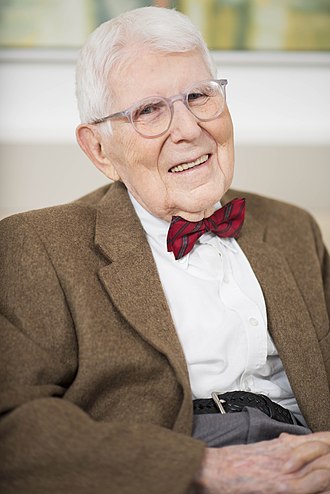
The fourth child of Russian Jewish immigrants. A Yale medicine graduate. A snappy dresser who loved bow ties.  

Dr. Aaron Beck, who died last week at the age of 100, was also a psychiatrist who significantly changed the way we treat patients and learn to treat themToday, millions have broken the shackles of mood and anxiety problems by using cognitive behavioural therapy; residents of psychiatry learn about the Beck’s Cognitive Triad as a core part of their training.  

aaron_beck_2016Dr. Aaron Beck 

I asked Dr. Ari Zaretskythe Psychiatrist-in-Chief and Vice President Education of the Sunnybrook Health Sciences Centre, to write about him – his work and legacy. In his essay, Dr. Zaretsky notes: His life story is that of a former psychoanalyst who rejected the dogmatism of mainstream Freudian psychoanalysis during the 1950s and 1960s and in doing so permanently changed the paradigm and transformed psychotherapy.” 

For those who wish to read more about Dr. Beck, I’ve included links, including to The New York Times obituary.  

DG   Continue reading

Reading of the Week: Yoga vs CBT – What’s Best for Anxiety? (JAMA Psych) Also, COVID & Mental Health (Lancet Psych) and Whitley on Cannabis Stigma (Van Sun)

From the Editor

Anxiety disorders are common, and often disabling to our patients. While treatments have improved, there is unmet need – and the desire to find new, scalable interventions. Increasingly, our patients look to different types of treatments, like yoga. But is trendy effective? Is yoga the not-so-new intervention we need?

Dr. Naomi M. Simon (of New York University) and her co-authors look at the treatment of generalized anxiety disorder with a sophisticated study. They compare yoga and cognitive behavioral therapy (CBT) against a psychological control condition, and against each other. So how do the treatments compare? “Kundalini yoga can reduce anxiety for adults with generalized anxiety disorder, but study results support CBT remaining first-line treatment.” We look at the big study and its big implications.

young-man-practice-yoga-beach-sunset_77186-348

What have we learned about COVID-19 and mental health? In the second selection, we consider a new editorial from The Lancet Psychiatry. Mulling the state of the literature after almost a year of the pandemic, they write: “The good news is that by October, 2020, mental health was top of the charts in terms of published papers and preprints on the effects of COVID-19. The bad news is that the quantity of papers is not matched by quality.”

And in our final selection, we consider an essay by Rob Whitley (of McGill University). He notes that 27% of Canadians had used cannabis in the last year, about half of them for medical reasons. He worries about the stigma around medical cannabis and champions more public education. “This can help create a climate of acceptance and inclusion for the growing number of Canadians with mental illness who use cannabis to improve their well-being.”

On another note: in a past Reading, we featured an essay by Toronto filmmaker Rebeccah Love who wrote about her mental illness. Her new film, “Parlour Love,” has its premiere this Saturday at 7 pm EST through Zoom. In this short, powerful film, she draws from her own experiences of bipolar mania and psychosis, and paints a portrait of a woman in crisis. RSVP – palmpremiere@gmail.com.

DG

Continue reading

Reading of the Week: COVID and a Mental-Health Second Wave; Also, Harry Potter & Suicide Prevention (CJP), and Bennett on Bipolar (Walrus)

From the Editor

There are more COVID-19 cases in the community – and in our hospitals and ICUs. What does it mean for mental health?

This week, we have three selections.

In the first, published in JAMA, Dr. Naomi M. Simon (of the NYU Grossman School of Medicine) and her co-authors write about the pandemic and the implications for mental health. They argue that there will be a second wave of mental health problems. “The magnitude of this second wave is likely to overwhelm the already frayed mental health system, leading to access problems, particularly for the most vulnerable persons.” Are they right – and what’s to be done?

istock-523360241-696x392

In the second selection, we look at a research letter from The Canadian Journal of Psychiatry. Paula Conforti (of the University of Toronto) and her co-authors consider a CBT intervention for school-age children to reduce suicidality and increase wellbeing. There’s a twist in the plot: the intervention is based on a Harry Potter novel. “This study found that a teacher-delivered, literature-based CBT skills curriculum was feasible and associated with reduced suicidality (ideation and behavior) in middle school-aged youth.”

Finally, in our third selection, we consider an essay by Andrea Bennett. In this Walrus essay, the writer discusses the possible link between bipolar and creativity. The essay is deeply personal. “I don’t dream about not being bipolar, because I don’t know where my self ends and where the illness begins – and if there is even really a difference.”

DG

Continue reading

Reading of the Week: Is CBD Useful for Mood Disorders? The New CJP Paper. Also, Peer Support and Online CBT (Psych Services) & the Art of Daniel Regan

From the Editor

This week, we have three selections.

With the legalization of cannabis, many big claims haven been made about the medicinal aspects of this drug – including by industry. Cannabidiol, or CBD, is often touted as being helpful yet non-addictive (in contrast to THC, the more famous cannabis molecule). In the first selection, UBC’s Jairo Vinícius Pinto and his co-authors consider cannabidiol in the treatment of mood disorders, reviewing the existing literature. Does CBD help? “The methodology varied in several aspects and the level of evidence is not enough to support its indication as a treatment for mood disorders.”

In the second selection, the University of Michigan’s Paul N. Pfeiffer and his co-authors try to improve depression treatment outcomes by combining a cutting-edge psychotherapy (CBT, delivered by computer) with a not-so-cutting edge approach (peer support). They conclude that the intervention “should be considered as an initial treatment enhancement to improve effectiveness of primary care treatment of depression.”

3750

And in the third selection, we look at the work of artist Daniel Regan, which is featured on the front cover of February issue of The Lancet Psychiatry. He notes: “I really think if I hadn’t gone on to study photography, I wouldn’t be here.” Featured above is “Abandoned,” part of a series of photos from Victorian-era asylums in the UK.

DG

Continue reading

Reading of the Week: CBT for Depression – What Really Works? The New JAMA Psychiatry Paper

From the Editor

“It changed my life.”

A few years ago, a patient described to me how helpful cognitive behavioural therapy was for him. CBT wasn’t his only treatment – he had a couple of medication trials – but he found the psychotherapy to be very helpful.

Others have had a similar experience, but CBT isn’t widely available in Canada; Puyat et al. found in a Canadian Journal of Psychiatry paper that the vast majority of people with depression don’t receive any form of psychotherapy or counseling. How can we address this access gap? Could different forms of CBT work including those that are less resource intensive? What to make of self-help?

In this Reading, we consider a new paper by Vrije Universiteit Amsterdam’s Pim Cuijpers and his co-authors that seeks to answer these questions. They use a network meta-analysis to compare five treatment formats with each other and control conditions (waiting list, care as usual, and pill placebo). Their conclusion: “This study suggests that group, telephone, and guided self-help treatments are effective interventions that may be considered as alternatives to individual CBT.”

dr-aaron-beck-at-work-595048284-5af62b4dae9ab80036aca7faAaron Beck: How to deliver the CBT he has championed (and should we all wear a bow tie)?

In this Reading, we consider the big paper and its big result, and the accompanying editorial by the University of Pittsburgh’s Dr. Holly A. Swartz and Jay Fournier.

DG

  Continue reading