From the Editor
“Media reports about suicide have the potential to influence suicide rates. Most research in this area has focused on increased rates of suicide that follow widely reported stories of suicide death, often in celebrities, the so-called Werther effect. However, a small and growing literature has investigated the Papageno effect in which widely disseminated stories of mastery of suicide crises and survival are followed by fewer suicides.”
So opens a fascinating paper recently published in The British Journal of Psychiatry. In it, Sangsoo Shin (of the University of Melbourne) and her co-authors look at a highly publicized news story: the singer Jon Bon Jovi intervening to stop a woman’s suicide attempt in 2024. Was there a Papageno effect? The authors analyzed suicide mortality data spanning a decade in Tennessee and 19 other states with 60 subgroups. “This study provides the first evidence of a Papageno effect following a widely publicised, real-life survival story.” We consider the paper and its implications.

Suicide prevention has come a long way since the SAD PERSONS mnemonic that many of us learned in medical school. And the research continues to evolve. What to make of it all, and how should the latest research inform practice? In the second selection, an episode of Quick Takes, I speak with Dr. Mark Sinyor, professor at the University of Toronto and staff psychiatrist at Sunnybrook Health Sciences Centre. We discuss the efficacy of suicide-prevention barriers (think the Bloor Viaduct here in Toronto) and restricting highly lethal pesticides. “You don’t actually need billions of dollars to prevent suicide. You just need really good coordination.”
In the third selection, from Lancet Psychiatry, a medical student discusses her suicidal thoughts. The paper – which is written anonymously – argues that many providers take the wrong approach when speaking to patients who are suicidal. “All I am saying is, if medicine placed the same emphasis on healing as it does on survival, I believe our approaches would change and perhaps our outcomes would improve as well.”
DG
Selection 1: “Suicide rates in the USA following the Jon Bon Jovi Papageno media event”
The British Journal of Psychiatry, 9 June 2026 Online First
Sangsoo Shin, Steven Stack, Thomas Niederkrotenthaler, Mark Sinyor

The Papageno effect was first coined in the context of finding a reduction in suicide rates following publication of such stories in Austria. This general outcome was replicated in Toronto, Canada. A study of the ‘1-800-273-8255’ Hip Hop song about a person surviving a crisis by calling a helpline identified 245 fewer suicide deaths in the USA following public attention to the song. More recently, a study found that major films in the USA with Papageno narratives were associated with fewer suicides. These latter two findings focus on fictional media and the literature is generally missing investigation of major true stories of survival in the media, likely because of a general absence of such stories. On Wednesday 11 September 2024, popular rock singer Jon Bon Jovi helped to persuade a woman not to die by suicide at a public location in Tennessee and the story received substantial public attention. This study aims to identify whether the story resulted in a Papageno effect in Tennessee and across the USA.
So begins a paper by Shin et al.
Here’s what they did:
- The authors examined whether suicide rates changed following widespread media coverage of Jon Bon Jovi’s intervention in a suicide attempt on a Tennessee bridge in September 2024.
- They analyzed monthly suicide mortality data from Tennessee and 19 comparison states using U.S. CDC WONDER data from January 2014 through December 2024.
- Suicide rates were modeled using quasi-Poisson time-series regression, adjusting for seasonality, long-term trends, unemployment, economic uncertainty, and the COVID-19 pandemic period.
- The primary outcome: the suicide rate in September 2024 compared with the rate expected based on historical trends.
- Different statistical analyses were done. To assess whether any observed effect was unusual, the investigators conducted placebo analyses by repeating the model and assigning the ‘intervention’ to earlier months in the study period; to assess geographic specificity, they repeated the analyses in the comparison states and applied a false-discovery-rate correction to account for multiple comparisons.
Here’s what they found:
- There were 106 suicide deaths in September 2024 in Tennessee.
- Expected deaths. Compared with 136 expected deaths based on historical trends, that represents a 22% reduction in suicide mortality (RR = 0.78).
- Analyses. This reduction was statistically significant and was among the largest effects observed in the temporal placebo analyses, suggesting that it was unlikely to be due to chance alone.
- Sex. The strongest effect was observed among males, whose suicide mortality was 26% lower than expected (RR = 0.74); this was the only subgroup that remained statistically significant after correction for multiple comparisons.
- Other states. In the comparison-state analyses, significant reductions were also observed in New Jersey and Washington; however, these findings were no longer statistically significant after correction for multiple comparisons. After correction for multiple comparisons, Tennessee was the only jurisdiction in which a significant reduction in suicide mortality remained.
A few thoughts:
1. This is a good and important study, helping to provide a new insight into suicide, and published in a major journal.
2. The main finding in nine words: “We found strong evidence of a localised Papageno effect…” More: there was a 30% reduction in suicide mortality among males in Tennessee in September 2024.
3. Wow.
4. The above summary doesn’t quite capture the nuance and detail of this study.
5. If bad news can have bad outcomes (the Werther effect), doesn’t it make sense that the opposite would be true (the Papageno effect)?
6. Like all studies, there are limitations. The authors note several, including some of the conservative assumptions: “our results may indicate a true reduction in suicide rates at several state levels that we are rejecting due to a conservative analytic strategy.”
7. Co-author Mark Sinyor has much to say about suicide and suicide prevention. See the next selection.
The full British Journal of Psychiatry paper can be found here:
Selection 2: “Suicide Prevention”
Mark Sinyor
Quick Takes, 24 June 2026
In this episode of Quick Takes, I speak with Dr. Sinyor.
Here, I highlight several comments:
On the Bloor Viaduct
“There’s no intervention that’s 100%. So nothing gets you all of the way. But does the intervention make a difference and make a huge difference? The answer is yes. We know that from studies of all sorts of means that have been restricted across the world.
“The wonderful thing about our 2025 paper is that we were clearly able to show that after those first few years, the barrier worked exactly as was intended. There were about ten deaths per year at that location beforehand, and there have been something like 150 plus deaths that have been prevented since then.”
On pesticides
“Pesticides are a really good news story but a cautionary tale.
“There have been some studies about locking them up, essentially finding a way to allow people to use very dangerous pesticides, but keeping them under lock and key. And interestingly, those were not particularly effective. What is effective are national laws banning highly lethal pesticides. And we were talking just before we started about Sri Lanka which is a great example of a country that had sort of the two key parts of the means restriction debate. The first one you’ve talked about, does it work? The answer is yes. And then often there’s an objection – in the case of pesticides, the objection is: what about our crops? One of the fascinating aspects of the laws that banned highly lethal pesticides in Sri Lanka is that, if anything, the crop yields increased afterwards. So, there was no economic disruption.”
On optimism about the future
“I think part of the role of people who are working in suicide prevention is to hold on to hope. There always has to be hope that we can do something. And I don’t think that it’s a pie in the sky idea. Worldwide, there were more than 800 000 suicides recorded 10-15 years ago, and now we’ve gotten it down to 720 000 suicides per year – a large reduction, almost 10%.”
On AI
“There’s definitely an interest in my area in higher level interventions with AI, trying to find people who might be at risk of suicide. I have mixed views of that. I think it’s an area that deserves study. The thing that worries me is that it’s not like a myocardial infarction (MI), suicide. If you have 200 people and you can identify the one person who’s at risk of an MI and give them treatment and ignore the other 199, the other 199 might be quite happy with that. In suicide, everybody is in distress. So, you can’t identify the one person who’s actually going to end their life and treat them and ignore the other 199. We need to give a good treatment for everybody.”
The above answers have been edited for length.
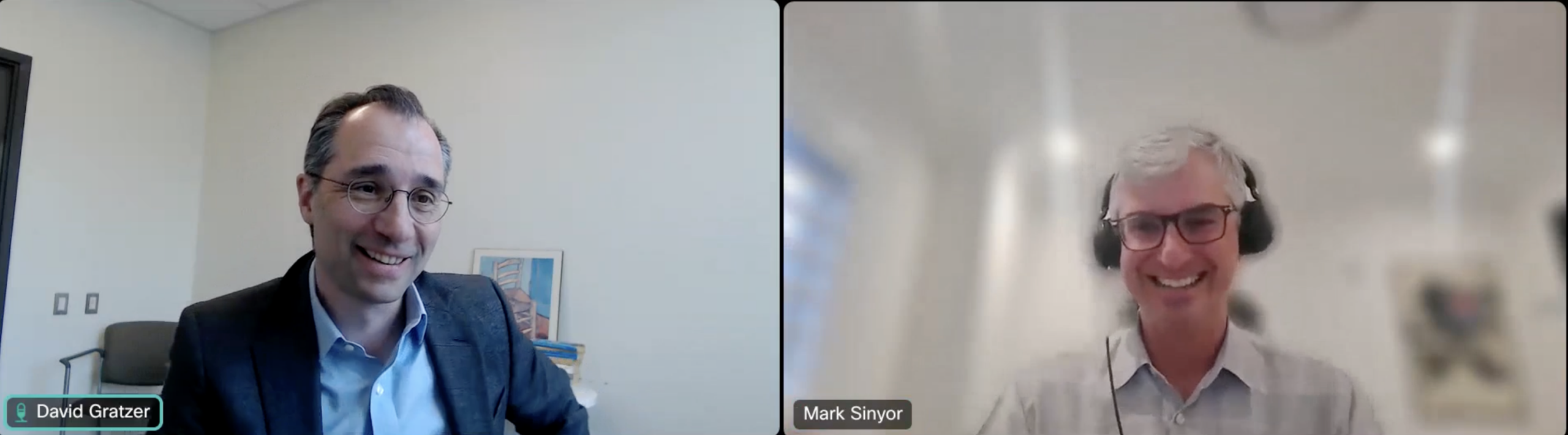
The podcast can be found here, and is just over 24 minutes long:
Selection 3: “Are you suicidal?”
Anonymous
The Lancet Psychiatry, 21 May 2026 Online First

Not an easy question to ask and certainly not an easy one to hear, especially when the answer is not a clear ‘no’. It is a question we rarely ask, except when someone’s agony becomes unmistakably visible, and alarming enough to frighten us. But are you asking because you want to understand me, or because you want to protect yourself legally, professionally, emotionally? I hope for the first, but more often feel like it is the latter.
So begins a paper written anonymously.
The author speaks about discomfort. “It must have been frightening for you. From the outside, my life appeared intact. I had supportive friends, a stable relationship, and I studied medicine. Something I have always wanted to do. Various hobbies, a safe place to live, many ideas and adventures to look forward to. And yet, something inside me hurt so deeply, and so persistently, that there were moments when continuing to live like this felt impossible.”
And she describes her suffering. “I did not want to die all the time. I wanted to stop suffering in a way I did not feel capable of carrying forever. I know such suffering was largely invisible to you. And so the questions began. If I were truly suffering this much, would I still be studying? Would I really have friends? Would I maintain a relationship? Would I get out of bed in the morning? A young student does not typically want to die, does she? If I did, should I really continue to study medicine? Is that not inappropriate? Those were not my questions, they were yours. I am unsure they helped either of us.”
She is critical of providers. “Maybe if you had been properly trained, both of us would have felt safer.” She writes as a medical student: “I understand a professional’s fear of suicidality. At the same time, I am convinced its extent is unnecessary, and trace it back to a significant gap in training. In medicine, we are poorly taught how to talk about suicide, how to sit through what it makes us feel like. As a medical student, I see how unprepared we are for psychiatric emergencies in every field there is. Especially considering the fact that suicidal suffering is not confined to psychiatric wards, I find this very scary to observe. We rarely ask people how they feel about being alive before their suffering becomes acute. Perhaps if we did, we would realise how common, how human, it is for suicidal thoughts to emerge in moments of exhaustion, hurt, or overwhelm.”
She criticizes the approach many providers take. “Suicidality is treated as something fundamentally illogical. Something that cannot truly belong to a person, but must be imposed by illness, distorted thinking, or pathology. Rather than questioning the conditions a person is living under, we question their cognition, their judgement, their credibility. We try to make their suffering unintelligible, because if it made sense, it would be frightening.” She speaks to the patient reaction. “We learn that being too truthful might trigger containment, coercion, or loss of autonomy. So we learn to protect ourselves from the very system that is meant to help us by being lonely with it.”
“What you can change is whether I am alone with it. What you can do is be there with me, validate my suffering, and accept that suicidal thoughts are a part of this healing process. What you can do is trust in evidence-based therapeutic interventions to reduce suicidal ideation over time. ‘There is no easy fix. This will take time. From now on you will have to go barefoot through hell…’” She describes the effects. “Paradoxically, this has not only been one of the most accurate, but also one of the most healing things I have heard as a suicidal person. It acknowledges reality instead of denying it, and, more importantly, it is honest. I understand the fear of death. I share it. What I do not understand, and never did, is why medicine is not more afraid of life lived in unbearable pain.”
She offers advice to our profession. “If that fear were taken as seriously in psychiatry, perhaps the goal of care would shift from merely keeping people alive to helping them heal.”
A few thoughts:
1. This is a very personal essay.
2. It’s also very moving.
3. Are we overly focused as providers on checklists and risk factors – and often unable to fully understand and explore the suffering?
The full Lancet Psychiatry paper can be found here:
https://www.thelancet.com/journals/lanpsy/article/PIIS2215-0366(26)00157-4/abstract
Reading of the Week. Every week I pick articles and papers from the world of Psychiatry.
Recent Comments