From the Editor
When you post a cute picture of your baby cousin on social media, you receive many likes and feel encouraged to post more. To speak technically, drawing on reinforcement learning, social rewards reinforce posting. But how do people with depression respond to social media? Would they be less motivated by reinforcement learning (consistent with past work)? Could platforms like Twitter (now X) actually worsen depression?
In a new JAMA Psychiatry study, Dan-Mircea Mirea (of Princeton University) and his colleagues attempt to answer these questions. They analyzed 17 million posts from almost 8 000 Twitter users to test the association between depression and the tendency to be reinforced by likes. “In this cross-sectional study, we found that individuals with depressive psychopathology showed a greater tendency to be reinforced by likes on Twitter.” We consider the paper and its implications; we also look at the accompanying Editorial.
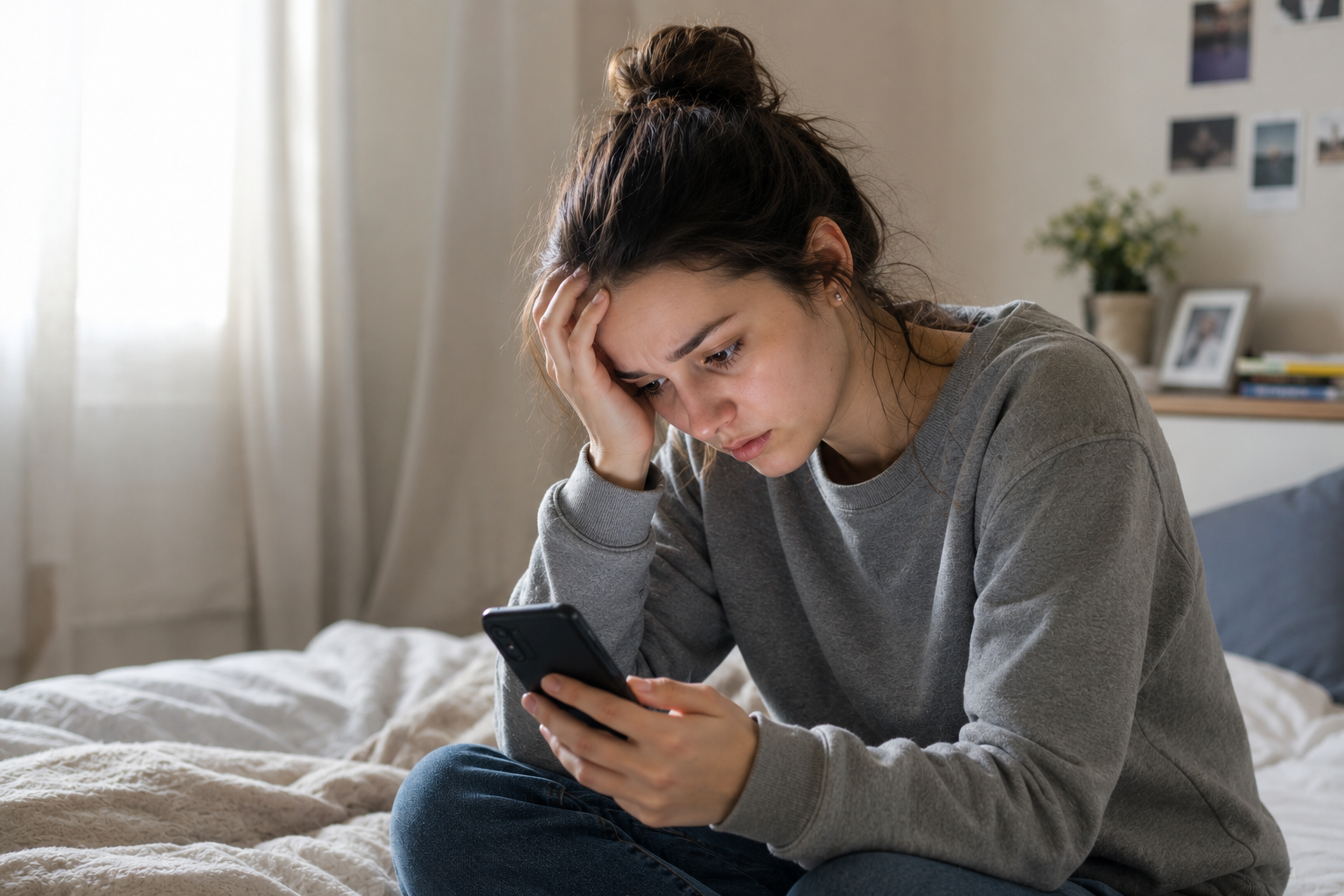
And in this week’s other selection, from JAMA, Dr. Jenna Taglienti (of Hofstra University) writes about a resident who misses a call shift. As the residency program director, she thinks on their conversation – and on being noticed. She recalls the loss of her mother. “I think about my mother labeling photographs and childhood keepsakes long before any of us were ready to imagine needing them.”
DG
Selection 1: “The Reinforcement Effect of Social Media Likes in Depression”
Dan-Mircea Mirea, Stephenie Chen, Jialing Ding, et al.
JAMA Psychiatry, 8 July 2026 Online First

Social media plays an increasingly large role in our lives, with over 5 billion users globally as of January 2024. The rapid spread of social media has raised concerns about its impact on mental health. Despite an explosion of research on this topic, findings remain inconclusive… The heterogeneity in this literature likely reflects the complexity, variability, and bidirectionality of the findings, as well as methodological limitations in prior research. First, most studies have relied on self-reported social media use, which only moderately correlates with actual use. Additionally, social media use is often treated as a monolith, with few distinctions past active use (posting) vs passive use (consuming content). To advance the field, researchers have called for more nuanced studies that incorporate behavioral data and focus on psychological mechanisms that might explain how the design features of social media interact with mental health. Here, we leverage behavioral Twitter data to uncover one promising mechanism – social media reinforcement learning – that we show is robustly associated with depressive psychopathology.
The social rewards that people receive from other users when they post – likes, views, shares, or comments – are a central feature of social media, thought to contribute to its addictive nature. Reinforcement learning, a framework for understanding how behavior is shaped by rewards, predicts that social rewards should reinforce posting. A higher rate of rewards (eg, more likes per post, on average) should make posting more valuable (ie, more worth the effort and the opportunity cost of giving up other rewards), leading users to post more frequently in the near future. This prediction has been supported in several social media datasets, including through computational modeling… However, little attention has been paid to individual differences in the reinforcing effect of likes, which might be particularly relevant to mental health. For example, more habitual social media users have been shown to be less sensitive to likes, in line with theories of habit formation, and adolescents have been shown to learn faster from likes. However, no study that we are aware of has investigated how social media reinforcement learning is modulated by depression or other psychiatric symptoms, despite extensive research in computational psychiatry linking depression to atypical reward processing… The study of reward processing on social media could both uncover psychological mechanisms linking social media use to mental health, and test the generalizability of laboratory-identified links between mental health and reward processing in real-world settings.
So begins a paper by Mirea et al.
Here’s what they did:
- They conducted a cross-sectional study using real-world Twitter behaviour to examine whether receiving “likes” reinforced future posting and whether this reinforcement differed according to depressive symptoms.
- They analyzed three datasets. Dataset one consisted of passively scraped Twitter users who had self-disclosed depression (plus a random comparison group), while two others included participants recruited through Twitter advertisements (dataset two) or an online crowdsourcing platform who completed depression assessments (dataset three).
- For each user, investigators retrieved recent tweets, grouped activity into daily intervals, and calculated the average number of likes received each day.
- Depression was assessed differently across the three datasets to test reproducibility: (one) self-disclosed depression diagnosis on Twitter, (two) a single-item rating of depressive symptoms over the previous four weeks, and (three) the validated Zung Self-Rating Depression Scale.
- The primary outcome: whether receiving more likes on one day predicted increased posting the following day (a behavioural measure of reinforcement by social media rewards).
Here’s what they found:
- The three datasets contained over 17 million posts from 7 736 Twitter users.
- Demographics. Dataset one comprised 1 045 users who reported a depression diagnosis on Twitter, and 5 001 randomly sampled users; dataset two comprised 601 users with a mean age of 45.2 years, with the majority male (55.5%); dataset three comprised 1 089 users with a mean age of 30.8 years and the majority female (64.6%).
- Postings. People with depression – or higher levels of depressive symptoms – were consistently more likely to increase their posting after receiving more likes than people without depression (that is, dataset 1: β = .013, dataset 2: β = .026; dataset 3: β = .008).
- Reproducibility. The finding was replicated despite marked differences in how depression was measured and how participants were recruited.
- Symptoms. They found that “greater reinforcement tendency was specifically associated with a transdiagnostic anxious-depression factor.”
A few thoughts:
1. This is an interesting paper, examining depression with a new (and modern) approach, drawing on 17 million posts, and published in a major journal.
2. The main finding in a sentence: “Across 3 datasets, we found that depression was associated with a greater tendency to be reinforced by likes.”
3. More: “This association was strikingly consistent in all datasets despite differences in sample composition and depression measures, and was largely robust to demographic controls and other moderators, persisting even though likes tended not to reinforce posting in participants who received fewer likes in general.”
4. The authors note the novelty: “Our findings add nuance to the existing literature, which generally links depression to blunted reinforcement learning. However, previous studies mostly relied on laboratory-based cognitive tasks, where small monetary rewards might not have been motivating enough for participants. Our study examined reward-driven behavior in a real-world environment, where users behave out of their own volition.”
5. Like all studies, there are limitations. The authors note several, including: “Our results apply only to people with depressive psychopathology who choose to post on social media. This population may not be representative of people with clinical depression.”
6. The paper is accompanied by an Editorial by Dr. Quentin J. M. Huys (of University College London) and Amy Orben (of the University of Cambridge), “Do Likes Reinforce Depression?” They begin by discussing social media:
“Social interaction is a critical component of mental well-being. Over the past few years, engagement via a variety of virtual modes has added new components to traditional social activities, and reduced the barriers for individuals to stay in touch with others and reach comparatively large audiences. The rapid growth of social media suggests that people interacting with these services might find them rewarding. Rewards, by definition, are outcomes which reinforce preceding activities and promote repetition. However, there has been a growing chorus of concerns around social media, suggesting they might be harmful for both mental health and the social fabric of societies more broadly.”

Dr. Quentin J. M. Huys
They comment on the noteworthiness of the study.
“With regard to depression itself: laboratory studies have long shown a reduction of reinforcement sensitivity in depression, conceptually in keeping with the subjective experience and clinical description of anhedonia. The fact that, here, reinforcement effects are increased in individuals with depressive symptoms suggests that these effects are not global and vary importantly depending on the setting, or in fact depend on specific goals.”
Is that problematic for those with depression?
“It may also be that patients with depression feel compelled to pursue rewards that are no longer aligned with well-being – a focus of psychotherapies. Interestingly, a recent preprint examining these relationships in a longitudinal dataset found that an increased sensitivity to social media likes predicted declines in mental health, but not vice versa.”
Further:
“What this work emphasizes, however, is that social media designs or affordances, such as likes, interact with aspects of reinforcement learning, such as how we learn from expected rewards, value expected reward, and select actions. Critically, with such technologies designed to maximize time spent online, as part of the so-called attention economy, they are inherently motivated to ensure highly rewarding experiences that lead to repeated and ongoing engagement. How such short-term reward exploitation relates to longer-term and more cumulative mental health processes is still largely unknown. But this current work highlights that there could be concerning influences at play.”
7. Is this Editorial persuasive? It’s certainly interesting.
The full JAMA Psychiatry paper can be found here:
https://jamanetwork.com/journals/jamapsychiatry/article-abstract/2851586
Selection 2: “Would Anyone Notice?”
Jenna Taglienti
JAMA, 16 July 2026

A psychiatry resident failed to show up for a scheduled shift.
She was rotating on internal medicine at the time, and the medicine program director called us because she had not arrived.
At first we assumed there had to be some mistake. Some scheduling error. Some confusion. People oversleep. Alarms fail. But after the phone calls went unanswered, the room began to change.
The program coordinator and I called. There was no answer. We sent text messages and waited. Still nothing. Eventually, we even called her mother, but it went to voicemail.
After about an hour, we found her address and got in the car. I later thought that the safer approach in situations like this is usually a welfare check through security or law enforcement. But at the time no one was thinking about policy. We were thinking about her.
Partway to her home, the phone rang. She had overslept.
So begins a paper by Dr. Taglienti.
She notes that: “Missing a shift during residency is not a small thing.” The next day, they meet with the resident and she apologizes. “There were no excuses, no attempt to minimize what had happened.” The resident makes a comment, though. “She had often wondered whether anyone would notice, if something ever happened to her. Then she said she had been shocked that we had been worried enough to come looking for her at home.”
The author discusses her mother’s absence. “A few months earlier, my mother had stopped answering her phone… No answer by itself did not mean much. Her phone battery would die. She would fall asleep early sometimes or become so absorbed in one of her projects that she would not notice text messages for a while.”
She speaks to her sister who feels something has changed. “I remember trying to decide whether concern had crossed into something else. I kept reaching for my phone and putting it back down again. Sending my sister to check on our mother that night felt dramatic. Checking up on her in the morning felt more reasonable.”
“My sister had already gone to the house. She was there with the police and was too shocked to make the phone call herself.” She recalls the moment. “I was sitting at my desk when I got the call, resident evaluations open on my screen, one Zoom meeting ending while another waited to begin. A notification for the next meeting had already appeared in the corner of my screen.”
She remembers vividly what happens next. “I texted my mentor 3 words: ‘My mom died.’ She called immediately. ‘Close the computer,’ she said. ‘Take the rest of the day.’ I thanked her, proceeded to ignore her very wise advice, and kept going with the evaluation meetings. There were still patients to see, evaluations to finish, questions waiting for answers. I finished resident evaluations, answered the emails that had already piled up, and kept moving through the list in front of me, wanting to leave as little unfinished as possible. At some point I remember thinking that if I stopped, I might not be able to start again.”
She visits her mother’s house in Buffalo. “Everything in the house had been left exactly as it was the day she died. She had been making Christmas gifts because she loved creating things by hand. Craft projects sat on the table waiting for the final details. Earlier versions had been pulled apart and remade because she wanted everything just right.”
“Weeks later, we found ourselves sorting through everything my mother had left behind. Every object in the house seemed to already belong to someone. My mother had labeled nearly everything in the house for one of us: photographs, childhood keepsakes, pieces of artwork. She talked often about who would get what and reassured us that everything had been written down in her will, safely tucked away in the closet.” They eventually find the will.
She thinks back on the episode from years before. “I still find myself returning to that interaction with the resident. I think about my mentor calling immediately after I texted 3 words, and how easily we learn to keep showing up while carrying things no one else can see… And I wonder how many people are carrying the same question: Would anyone notice?”
A few thoughts:
1. This is a beautiful essay.
2. The passage about carrying on is haunting and worth repeating. “At some point I remember thinking that if I stopped, I might not be able to start again.” Who in medicine hasn’t had such a thought?
3. Commenting on this paper in social media, Dr. Taglienti notes that it took her five years to realize that “I was that resident.”
4. Her writing was featured in a past Reading. On her cancer and her career, Dr. Taglienti writes: “No professional title replaces watching your child grow up. Institutional loyalty does not protect you from what happens when you postpone your own care. Medicine asks a great deal. And we give deeply. But it cannot take everything.” That paper can be found here:
The full JAMA paper can be found here:
https://jamanetwork.com/journals/jama/article-abstract/2851724
Reading of the Week. Every week I pick articles and papers from the world of Psychiatry.
August 1, 2026 at 2:12 am
I really love reading these articles because they serve as a great substitute for your one-on-one lectures.