Tag: Academic Psychiatry

Reading of the Week: Online DBT – the New JAMA Paper; Also, Prediabetes and Preaddiction, and Greenberg on the Delusional Ones (Acad Psych)

From the Editor

He cut himself out of frustration with a break-up. She came to the ED with suicidal thoughts after losing her job.

Some patients need help with ongoing self-harm and suicidal thoughts – but access to care is challenging, particularly for dialectal behavioural therapy. Could a simple intervention help? Could it be delivered virtually?

In the first selection, Dr. Gregory E. Simon (of Kaiser Permanente Washington Health Research Institute) and his co-authors detail a pragmatic randomized trial that evaluated two low-intensity outreach programs, aiming to reduce risk of self-harm and suicidal behaviour. In this new JAMA study, they conclude: “Compared with usual care, offering care management did not significantly reduce the risk of self-harm, and offering brief online dialectical behavior therapy skills training increased the risk of self-harm among at-risk adults.” We look at the study.

In the second selection, Thomas McLellan (of the University of Pennsylvania) and his co-authors note the failings of substance treatment and then mull a way forward: considering the approach to diabetic care and the concept of prediabetes. Should we embrace preaddiction? They write: “the diabetes example shows that an early intervention approach can work given a comprehensive, sustained effort.”

And in the third selection, Dr. Norman R. Greenberg (of Yale University) contemplates his patient’s psychosis and his approach. Drawing on an old Hasidic tale, this resident of psychiatry stops debating with his patient; he chooses to listen to him instead. He writes: “I may not always be able to convince others of my perspective, I hope that I am able to convince others that we share similar goals and that I care about them.”

DG


Continue reading

Reading of the Week: Better with Time? The New JAMA Paper on Stigma; Also, Dr. Steuber on Real Doctors – and Real Stigma (Academic Psych)

From the Editor

“To say that I didn’t know my great-uncle, Wolfe Levine, would understate things. I didn’t even know of such an uncle, brother of my mother’s father (a grandfather with whom I was close). In retrospect, it’s clear that my great-uncle was simply unmentionable.” In a long essay, writer Howard Husock notes that his great uncle, who suffered from mental illness, was never mentioned.

Society’s view of mental illness has changed much in recent years (good), but some stigma still exists (not so good). How have the public’s views shifted over time?

In our first selection, drawing from JAMA Network Open, we look at a new paper by Bernice A. Pescosolido (of Indiana University) and her co-authors. Reviewing attitudes and beliefs over 22 years, they find that: “this survey study found the first evidence of significant decreases in public stigma toward depression.” That said, not all the results are encouraging. We look at the paper and its clinical implications.

In the second selection, Dr. Elizabeth R. Steuber (of Johns Hopkins University) writes about the stigma faced by those in mental health care. Dr. Steuber, who is a resident of psychiatry, discusses the comments of a patient. She contemplates her work and the potential to change ongoing stigma: “I am hopeful that by leading through example on the medical floors, psychiatry trainees will continue to reshape how the field is seen by society at-large, even if it is only one patient at a time.”

DG

Continue reading

Reading of the Week: Telepsychiatry – the Reality, the Potential, the Problems

From the Editor

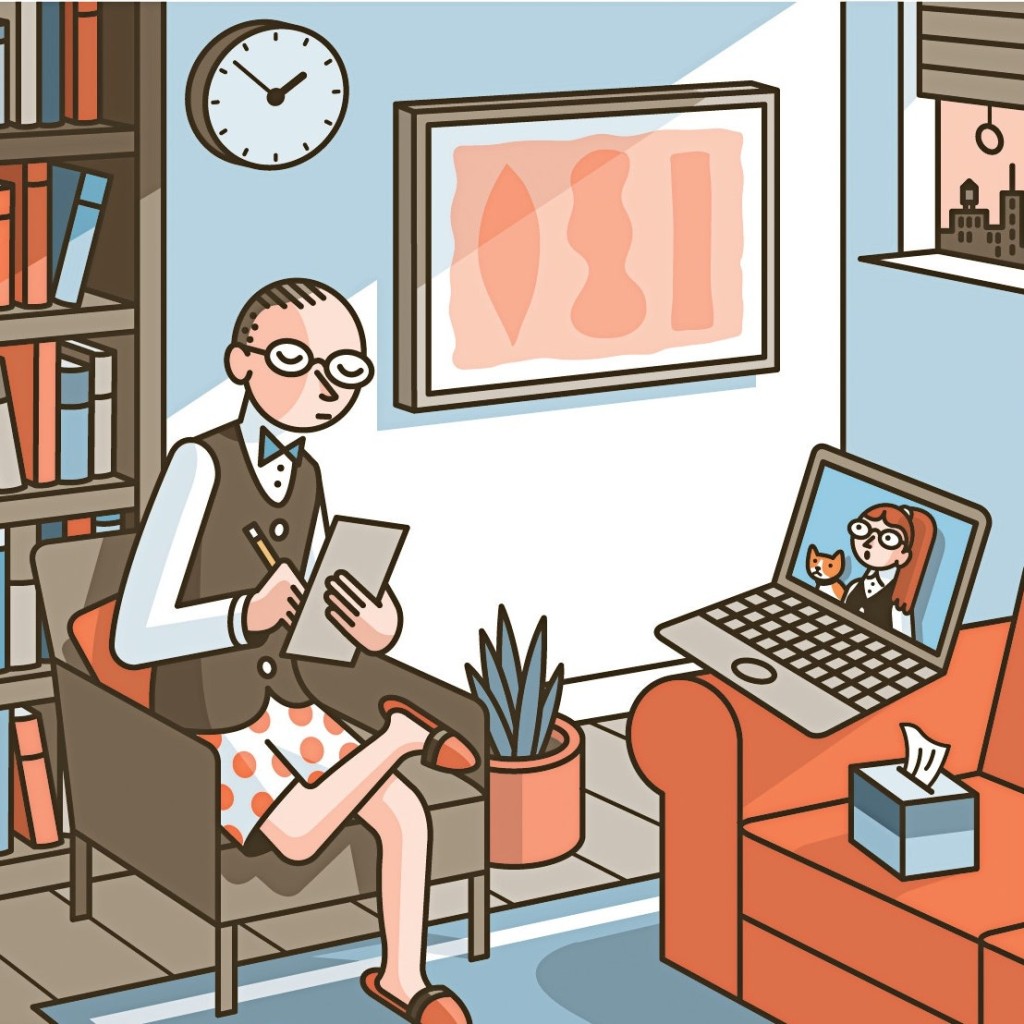
Just a handful of months ago, mental health work didn’t require a webcam or a lighting ring, and no one talked about Zoom fatigue. The world is different now, obviously. With COVID-19, telepsychiatry is very much part of our clinical work.

This week, we consider three papers focused on telepsychiatry and our new world.

How widespread is the adoption of telepsychiatry in this pandemic era? In the first selection, Jonathan Cantor (of the RAND Corporation) and his co-authors draw on a big American database to answer that question. In Psychiatric Services, they write: “During the COVID-19 pandemic, the percentage of outpatient mental health and substance use disorder treatment facilities offering telehealth has grown dramatically. However, our analyses also indicated that considerable proportions of mental health and substance use disorder treatment facilities still did not offer telehealth as of January 2021…”

theapy

In the second selection, John C. Fortney (of the University of Washington) and his co-authors consider two different types of care: with psychiatrists directly involved in patient care (through televideo) or indirectly, by providing support to primary care. In a JAMA Psychiatry study, they do a comparison. Spoiler alert: both approaches were effective, suggesting great potential, especially for those in rural areas.

Of course, not everyone is enthusiastic about telepsychiatry. In our third selection, Dr. J. Alexander Scott (of the University of Michigan), a resident of psychiatry, describes his ambivalence. His Academic Psychiatry paper starts memorably: “Admittedly, I’ve never liked telemedicine.” He outlines some of the problems with our digital world.

DG

Continue reading