Tag: Clark

Reading of the Week: AI & Therapy

From the Editor

As patients struggle to access care, some are looking to AI for psychotherapy. Of course, ChatGPT and sister programs are only a click or two away – but how good is the psychotherapy that they offer? 

In a new American Journal of Psychotherapy paper, Dr. Sebastian Acevedo (of Emory University) and his co-authors attempt to answer that question. Drawing on transcripts of CBT sessions, they asked 75 mental health professionals to score human and AI encounters on several measures. So how did ChatGPT fare? “The findings suggest that although ChatGPT-3.5 may complement human-based therapy, this specific implementation of AI lacked the depth required for stand-alone use.” We consider the paper and its implications.
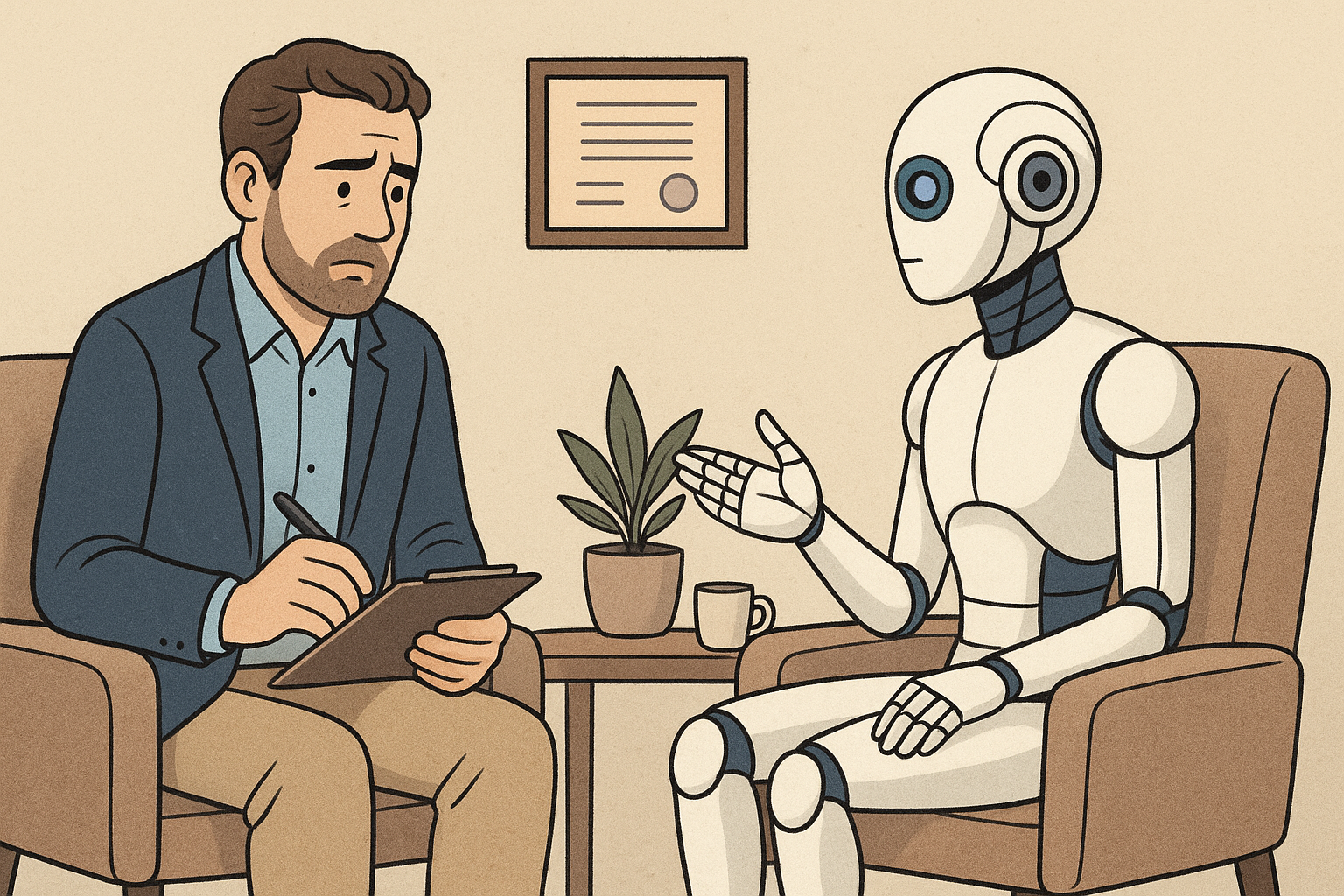
In the second selection, from JMIR Mental Health, Dr. Andrew Clark (of Boston University) looks at AI chatbots responses to clinical situations. Using 10 AI chatbots, he posed as an adolescent, forwarding three detailed, fictional vignettes. The results are surprising. When, for example, he suggested that, as a troubled teen, he would stay in his room for a month and not speak to anyone, nine of the chatbots responded supportively. “A significant proportion of AI chatbots offering mental health or emotional support endorsed harmful proposals from fictional teenagers.”

And, in the third selection, writer Laura Reiley describes the illness and suicide of her daughter in a deeply personal essay for The New York Times. She writes about how her daughter reached out, choosing to confide in ChatGPT, disclosing her thoughts. “ChatGPT helped her build a black box that made it harder for those around her to appreciate the severity of her distress.”

DG

Continue reading

Reading of the Week: After COVID – the New Lancet Psychiatry Paper; Also, Clark on Therapy (QT) and Physicians, Heal Thyselves (JAMA Net Open)

From the Editor

The first reported cases were almost three years ago. Yet, with this pandemic, many questions remain. No wonder. The patient experience is so varied. Some of our patients complain of time-limited, mild symptoms. Others seem affected by ongoing, non-physical symptoms. And many haven’t had any symptoms.

How common are neurological and psychiatric problems? Do they last? Are they less common with newer variants? This week, in the first selection, we consider a new Lancet Psychiatry paper; Max Taquet (of the University of Oxford) and his co-authors try to answer these questions and others. Drawing on the health records of almost 1.3 million people with a recorded diagnosis of COVID-19 and focusing on 14 different outcomes (including anxiety and mood disorders) across eight nations, they find: “post-COVID neurological and psychiatric outcomes followed different risk trajectories: the risk of cognitive deficit, dementia, psychotic disorder, and epilepsy or seizures remained increased at 2 years after a COVID-19 diagnosis, while the risks of other diagnoses (notably, mood and anxiety disorders) subsided early and showed no overall excess over the 2-year follow-up.” We look at the paper and its clinical implications.

In this week’s second selection, we consider a new Quick Takes podcast interview with David Clark (of the University of Oxford). Prof. Clark speaks about IAPT, the UK’s program to expand access to psychotherapy, which he co-founded. “We’ve still got some distance to go, though, but the IAPT services are seeing about a million people a year who wouldn’t have previously had psychological therapy.”

Primary care has an essential role in our health care system. In the third selection, Emily Rhodes (of the Ottawa Hospital Research Institute) and her co-authors mull physicians and their personal connection to primary care in a new JAMA Network Open paper. They find: physicians are less likely to be rostered with family docs, and less likely to visit them. They conclude: “Emphasis on the importance and improvement of access to primary care for physicians is a potential means to improve overall health for physicians and patients.”

DG

Continue reading