From the Editor
Canada’s Parliament is debating a ban. Government officials are discussing similar measures in the UK, Poland, Denmark, and Malaysia. As more and more countries think about restricting kids from access to social media, the Australian experiment is interesting and important. In 2024, Australia passed legislation banning youth under the age of 16 years.
But has the Australian law had an effect on use? In The BMJ, Courtney Barnes (of the University of Newcastle) and her co-authors attempt to answer that question with a prospective observational study. They analyzed survey data collected just before implementation and again three months after it, involving 408 youth. “Despite the intent of the Social Media Minimum Age Act 2024 to delay access to social media platforms and reduce the potential for online harms, little evidence was found of immediate substantive reductions in reported social media use by adolescents under 16 years.” We consider the study and its implications.
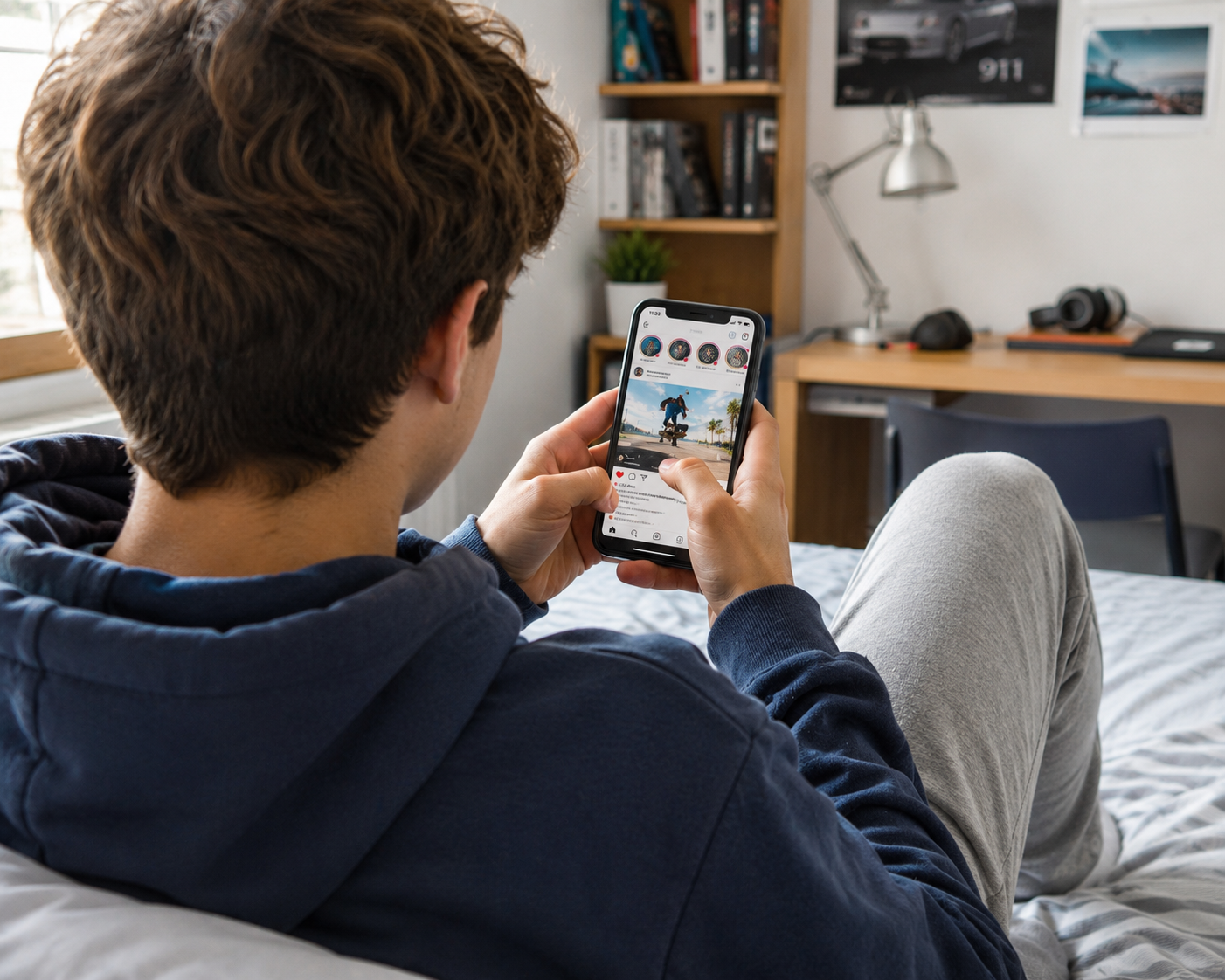
In the second selection, Maiara da Silva Martins (of Pontifical Catholic University of Rio Grande do Sul) and her co-authors focus on cellphone restriction in Brazil during the school day. In a letter published in Journal of the American Academy of Child & Adolescent Psychiatry, they report on a longitudinal study involving 1 643 students. “Our findings suggest that school-hour restrictions alone are insufficient to alter the trajectory of internalizing problems like anxiety and withdrawal.”
And in the third selection, from The Canadian Journal of Psychiatry, Dr. Colin M. Shapiro (of the University of Toronto) and his colleagues write about sexsomnia. They note that the condition is more common than previously believed and offer some clinical tips. “For clinicians, the key point is that sexual behaviours during sleep can occur without conscious awareness and should be considered within the broader spectrum of parasomnias during clinical assessment.”
DG
Recent Comments