From the Editor
The manic episodes had been destructive, if short-lived, damaging her relationships and leaving her in debt. But the depressive episodes sat on her for years, leaving her demoralized and feeling hopeless. Will I ever get better? Like many, my patient found that bipolar depression could be hard to treat. She hesitated on ECT, worrying about the cognitive effects.
Is there an alternative? In a new American Journal of Psychiatry paper, Dr. Daniel M. Blumberger (of the University of Toronto) and his colleagues attempt to answer that question. They report on a double-blind, randomized, parallel-group pilot clinical trial comparing ECT and magnetic seizure therapy (MST), a newer neuromodulation technique that uses a magnetic field to induce a seizure. The study included 55 people. “Relative to ECT, MST demonstrated similar clinical outcomes and greater cognitive safety.” We consider the study and its implications.
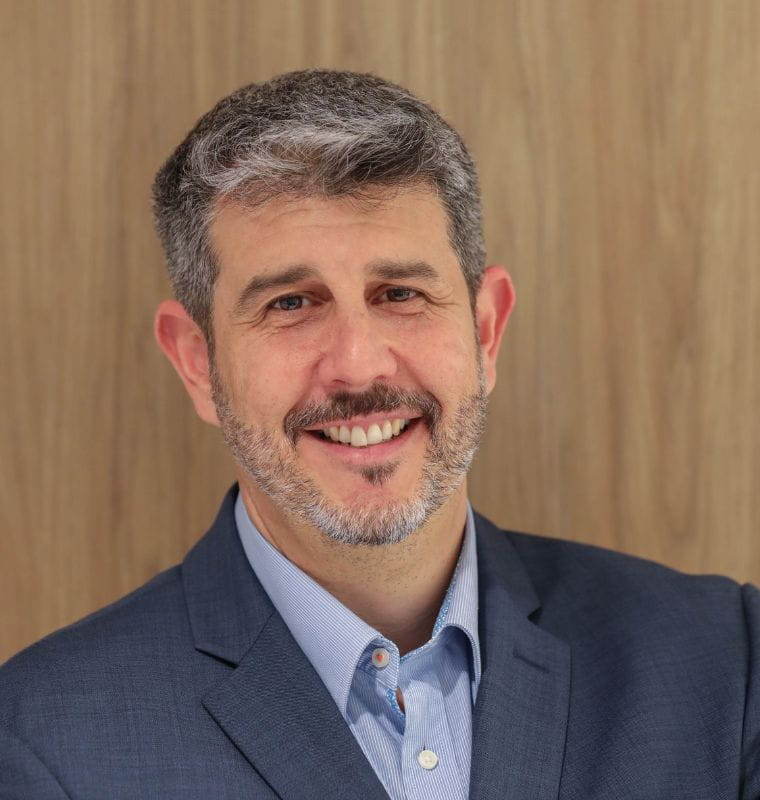
Daniel M. Blumberger
In the second selection, Dr. Carlos De las Cuevas (of the University of La Laguna) wonders if psychiatry is becoming “the science of unhappiness.” He worries that it is. “Poverty, injustice and loneliness shape mental health, but they are not mental illnesses. At the same time, clinicians cannot bracket out the social world from their practice, nor should they.”
And, in the third selection, Hilary Thorpe writes about postpartum psychosis in The Globe and Mail. The essay is personal, drawing on her experiences with the illness and her recovery. “Lindsay Clancy’s story reminds me how close my life came to going another way, and how fortunate I am that I got help when I needed it.”
Note: There will be no Reading for the next two weeks.
DG
Selection 1: “Clinical and Cognitive Outcomes Comparing Right Unilateral Ultrabrief Electroconvulsive Therapy Versus Magnetic Seizure Therapy for Bipolar Depression: The CORRECT-BD Trial”
Daniel M. Blumberger, Fidel Vila Rodriguez, Shawn M. McClintock, et al.
The American Journal of Psychiatry, October 2026

Although several established, empirically based treatment options are available for bipolar depression, it remains more difficult to treat than unipolar depression and is associated with poorer long-term functional outcomes. Research suggests that the prevalence of treatment resistance is higher in bipolar depression than in major depressive disorder and depressive episodes account for 75% of the reported morbidity among patients with bipolar disorder. Hence, clinicians often resort to combination pharmacotherapy. This raises concerns regarding potential drug interactions, adverse drug effects, rapid cycling, intolerability, and patient nonadherence… Although electroconvulsive therapy (ECT) is a well-established and highly effective treatment for major depressive disorder, with remission rates in the range of 30%–50% among patients experiencing treatment-resistant depression, it is not considered a first-line treatment option for patients with bipolar depression unless there are clear severity indicators (i.e., psychosis or acute suicidality). This is due largely to the cognitive side effects and stigma associated with ECT…
Magnetic seizure therapy (MST) is a newly developed form of convulsive therapy that uses high-frequency and high-intensity repetitive transcranial magnetic stimulation rather than direct electrical stimulation to achieve therapeutic benefits. The electric field induced by MST is 5–10 times more focal than that induced by RUL-UB ECT, which spares medial temporal brain structures thought to be involved in the cognitive adverse effects of ECT. Recent studies have consistently demonstrated antidepressant efficacy of MST along with minimal cognitive adverse effects, including one study of 42 patients with bipolar disorder in the manic state who received either MST or ECT. However, there is still a paucity of research that has specifically compared MST and RUL-UB ECT in treating bipolar depression.
So begins a paper by Blumberger et al.
Here’s what they did:
- They conducted a “randomized, double-blind, parallel-group clinical trial” at four academic centres in Canada.
- They included adults with bipolar I or II disorder experiencing a major depressive episode without psychosis who had a baseline score greater than 21 on the 24-item Hamilton Rating Scale for Depression (HAM-D).
- Participants received either right unilateral ultrabrief-pulse electroconvulsive therapy (RUL-UB ECT) or magnetic seizure therapy (MST). Treatment continued until remission, withdrawal, or a maximum of 21 treatments.
- The primary clinical outcome: remission, assessed using the HAM-D.
- The primary cognitive outcome: autobiographical memory, measured with the Autobiographical Memory Test (AMT).
Here’s what they found:
- There were 55 participants randomized; 45 received an adequate course of treatment (at least eight sessions or until remission).
- Demographics. The mean age was 43.1 years; 60% were women; 82% were White; 64% had bipolar I disorder.
- Remission. Among participants who received an adequate course of treatment, remission was achieved by 30% of those receiving ECT and 20% of those receiving MST. In the intention-to-treat analysis, the rates were 22% and 18%, respectively.
- Autobiographical memory. Clinically important worsening in autobiographical memory (a decline of at least 25% on the Autobiographical Memory Test) occurred in 22.2% of the ECT group, compared with 7.1% of the MST group. (!!)
- Other outcomes. Both treatments produced similar improvements in depressive symptoms, suicidal ideation, and quality of life. Reorientation after treatment was faster with MST (7 minutes versus 19 minutes with ECT); all four serious adverse events occurred among participants in the ECT group.
A few thoughts:
1. This is an interesting and important paper, published in a major journal.
2. The big findings in two sentences: “In patients with bipolar depression in this pilot trial, MST had descriptively similar clinical effects on depression symptoms relative to ECT. Regarding cognitive safety, a greater proportion of individuals in the ECT group relative to the MST group experienced worsening performance on an autobiographical memory measure at the end of the treatment course.” Impressive.
3. This paper adds to the literature. Until now, most such comparisons for bipolar depression have been open label or naturalistic.
4. But this was a small pilot study.
5. Still, it’s an exciting result.
6. MST has been considered in past Readings. In one selection, Dr. Blumberger spoke about neuromodulation and the future. “I believe that MST is potentially a first-line convulsive therapy.” That Reading can be found here:
The full American Journal of Psychiatry paper can be found here:
https://psychiatryonline.org/doi/10.1176/appi.ajp.20250955
Selection 2: “Psychiatry is not the science of unhappiness”
Carlos De las Cuevas
BJPsych Bulletin, June 2026

Psychiatry is not the science of unhappiness. It was never meant to be. Yet in recent decades the boundaries of the discipline have expanded so widely that almost any form of distress seems eligible for medical attention. In societies preoccupied with well-being, psychiatry faces the temptation to annex unhappiness itself as a diagnostic domain. If we yield to that temptation, we risk losing sight of what defines our profession: the care of people whose suffering is rooted in illness, not in the ordinary trials of human existence.
So begins a paper by Dr. De las Cuevas.
“Psychiatry stands between medicine and society, compelled to integrate the biological underpinnings of illness with the personal meanings of suffering. Yet, as the field has grown, the boundaries that once defined it have begun to dissolve.” He suggests that the biopsychosocial model “was conceived as a corrective to biomedical reductionism.”
He feels that balance is needed. “Housing insecurity, unemployment, violence and structural disadvantage shape both the onset and course of mental disorders and must be incorporated into assessment, formulation and care. Recognising these forces does not imply that psychiatry should treat poverty itself but rather that it should treat those in whom adversity has precipitated or exacerbated illness while advocating – alongside other sectors – for structural conditions more conducive to mental health.”
He notes a “quiet but persistent expansion of diagnostic categories” and reminds us of Dr. Allan Frances’ warning about “diagnostic inflation.” De las Cuevas feels that “normal sorrow” has been transformed into depressive disorder. “The result is a subtle but profound shift in meaning: sadness becomes pathology, and treatment replaces tolerance… The grief of loss, the despair of unemployment and the anxiety of solitude are interpreted as symptoms requiring medication rather than human understanding. In this drift, psychiatry risks confusing the limits of medicine with the limits of life itself.”
He recognizes social determinants of health. “The evidence linking social determinants to mental illness is overwhelming. Systematic reviews confirm that poverty, unemployment, inequality and exposure to violence increase risk and chronicity across diagnostic categories. Such findings enrich psychiatry’s understanding of vulnerability, but they must inform care without redefining the field’s identity. The response to inequality is not diagnosis but justice. The task of psychiatry is not to treat poverty but to treat those whom poverty has made ill.”
“Peter Conrad demonstrated that medicalisation often leads to ‘pharmaceuticalisation’, the translation of social and moral problems into targets for medication. This process is not merely conceptual but ethical. When psychiatry extends its remit beyond the domain of illness, it inadvertently diverts finite resources from those whose disorders are most severe and disabling. Walker and colleagues estimated that individuals with serious mental illness die 10–20 years earlier than the general population, largely from preventable physical diseases. Expanding the frontiers of psychiatry towards the mildly distressed risks marginalising precisely those patients whose need for care is most acute.” He also acknowledges the complexity. “Social adversity may be a causal pathway to mental illness, yet not all adversity warrants diagnostic translation. Conversely, some psychological states rooted in hardship do, over time, cross the threshold into disorder. The challenge is to hold these dilemmas in view, to recognise that causation does not erase categorical distinctions and to maintain a conceptual framework that is clinically useful without being reductive.”
How to proceed? “The challenge, therefore, is not to enlarge psychiatry but to clarify it. Our discipline must distinguish, with humility and precision, between illness and adversity, between what medicine can heal and what human beings must learn to endure.”
He closes: “Psychiatry, at its best, is not the science of happiness but the practice of understanding. Its purpose is not to eradicate all forms of unhappiness but to discern those that stem from disorder from those that belong to the human condition.”
A few thoughts:
1. This is a controversial paper.
2. It’s also well argued.
3. Others have made this core argument, but he raises good points at a time when some in psychiatry seem to blur the line between mental disorders and mental distress. To play devil’s advocate: is he being simplistic? After all, can’t grief become depression? Can’t anxiety in response to adversity become an anxiety disorder for some?
4. “The practice of understanding” – a great phrase.
5. Is he persuasive? Readers can decide for themselves.
The full BJPsych Bulletin paper can be found here:
Selection 3: “I survived postpartum psychosis. Here’s what I wish I’d known”
Hilary Thorpe
The Globe and Mail, 18 October 2026

Four weeks after giving birth, I was diagnosed with postpartum psychosis and admitted involuntarily to the hospital on the remote island where my husband Ty and I lived. I was separated from my new baby, Hazel, and held down while a doctor injected medication into my backside. When I think of it now, I can feel the scream emanating from my body, a tightness that needed to break free.
So begins an essay by Thorpe.
She describes her journey. “The year before Hazel’s birth, I had a second-trimester miscarriage. Prenatal screening had flagged a high risk of Down syndrome, a disorder as rare as postpartum psychosis but one I was familiar with. When Ty and I flew to the mainland for an amniocentesis, we learned the baby’s heart had already stopped beating. I shoved my sadness deep inside and went back to work a few days later. As a postdoctoral fellow on the academic track, I was not willing to let something as common as a miscarriage interfere with my productivity.”
“I got pregnant with Hazel three months later and white-knuckled my way through the pregnancy. Given my history, I was flagged for every prenatal test possible, but I didn’t encounter a single mental health screen, despite later learning that ‘previous pregnancy loss’ is a risk factor for perinatal mood disorders.” She describes her determination to keep working. “I marked a stack of student papers before my contractions got too intense.” Even after the birth, her schedule remained busy. “I added ‘taking care of a newborn’ to my to-do list, but I neglected to take anything off it. Family and friends visited. I entertained them. I helped a student scope her final project for the course I was co-teaching.”
She grew ill. “After three weeks of over-functioning on very little sleep, I began to fall apart. I started having trouble sleeping. For the first time, I experienced powerful flashbacks of my miscarriage. I noticed I was having memory gaps, blacking out in the middle of the day. I worried Hazel would be taken away from me. I tried to act normal. I knew I needed to sleep, but I couldn’t remember how exactly to do that. My midwife gave me a sleep aid and said I wouldn’t be able to breastfeed for 24 hours. I put the pill on my tongue, then spat it out and burst into tears, unsure what to do.” She was hospitalized soon after.
She speaks of her recovery. “By the time I got pregnant again, I’d spent time in therapy, quit academia and had a fundamentally different approach to life. I listened to my body, cancelled plans when I was tired and guarded my sleep like it was a precious resource.” She writes about her son’s birth. “We spent his first weeks hanging out in the backyard. Ty cooked and brought Hazel back and forth to daycare. I took naps.”
She notes the burden of societal expectations. “Our culture tells women that being a mother is the best possible thing. We are taught to put everyone’s needs above our own; to function at any cost… When I tell other moms my story, they say, ‘That could have been me.’ Sometimes they confess that they are barely functioning, on a hair trigger, constantly feeling like a failure.”
“This is the tricky thing about mental health and illness – how you present on the outside doesn’t necessarily reflect how you’re feeling on the inside. A whole lifetime of conditioning does not disappear when a crisis arises.”
A few thoughts:
1. This is a raw essay.
2. The description of her hospitalization is tough to read.
3. She ends on a very positive note: “Hazel and Arlo are teenagers now. Being their mom is one of the great gifts of my life.” Beautiful.
The full Globe and Mail essay can be found here:
Reading of the Week. Every week I pick articles and papers from the world of Psychiatry.
Recent Comments